

Months before I started writing The Step and the Walk–back when it was still a bunch of nebulous ideas blooming in my head–I wrote a post about the real-life inspiration for the city of Evandra, the capital of the country Sindalia. At the time, the University of Evandra was modeled after Oxford University, and I mentioned Evandra was city of spires, much like the real Oxford itself.
Then I went in to describe a beautiful cathedral and Saint Pheirida…who, in the final iteration of the novel, never made it in. The whole scene where Andresh pretended to be an art student to practice summoning demons in the cathedral crypt, while such a cool idea, was transformed into something else…but echoes of this ended up in the book. Just not in the same way.
Other influences ended up popping up in the book, based on places I’ve been to: Ireland and Japan. Let’s take a closer look:
Trinity College, Dublin, Ireland
The National Library of Evandra was placed inside an old, enormous church with many spires and towers. This part still suggests its Oxford influences, but the interior of the church, meant to be a library, is inspired by the library at Trinity College in Dublin. I was lucky enough to have visited it on a school trip when I lived in Wales, and fell in love with it. Here are some pictures of the interior, which is exactly how The National Library of Evandra looks in my mind (click the pics to zoom in):


In the library at Trinity College, there is a special room that houses the national treasure, The Book of Kells. I can’t remember if it was in a back room or down some stairs and then kept in a special room, but I used this as inspiration for the National Library of Evandra to display its private collection, featuring the grimoire known as The Book of Simoneth. In the novel, Andresh pays the library a visit in order to learn the true name of the demon he wants to contract with.
My memory is hazy–this is twenty-two years ago, after all–but I remember The Book of Kells being placed on a pedestal behind glass, opened to a beautiful illuminated page in the manuscript, and the lights in the room were very, very dim. (Actually, I just Googled to see if I could confirm this is how it’s displayed and according to this article, I’m pretty close.) I decided to display The Book of Simoneth and other historical treasures the very same way in The Step and the Walk, except candlelight is used to keep the room dim, not specially installed lighting. The book is inspired by the Regency era, after all, so no electricity!
So, the library at Trinity College serves as a visual inspiration for a specific setting in the novel. Japan, on the other hand, has some more cultural influences that popped up. I couldn’t help it. I lived in Japan for six years and things rubbed off on me that appeared in the book. Let’s take a closer look.
Japan
Because I was a teacher in Japan, I learned about high school culture pretty quickly. The schools have ceremonies for the beginning of the year, the end of the year, and graduation. These are very serious and important.
The university’s Opening Ceremony, which is briefly mentioned in The Step and the Walk, is inspired by the high school graduations I attended in terms of how serious the ceremony is and what people wear.
While most people in the audience at graduation dressed up, there were always a handful of people (including some teachers) wearing kimono to the event. I always thought that was really cool to see.
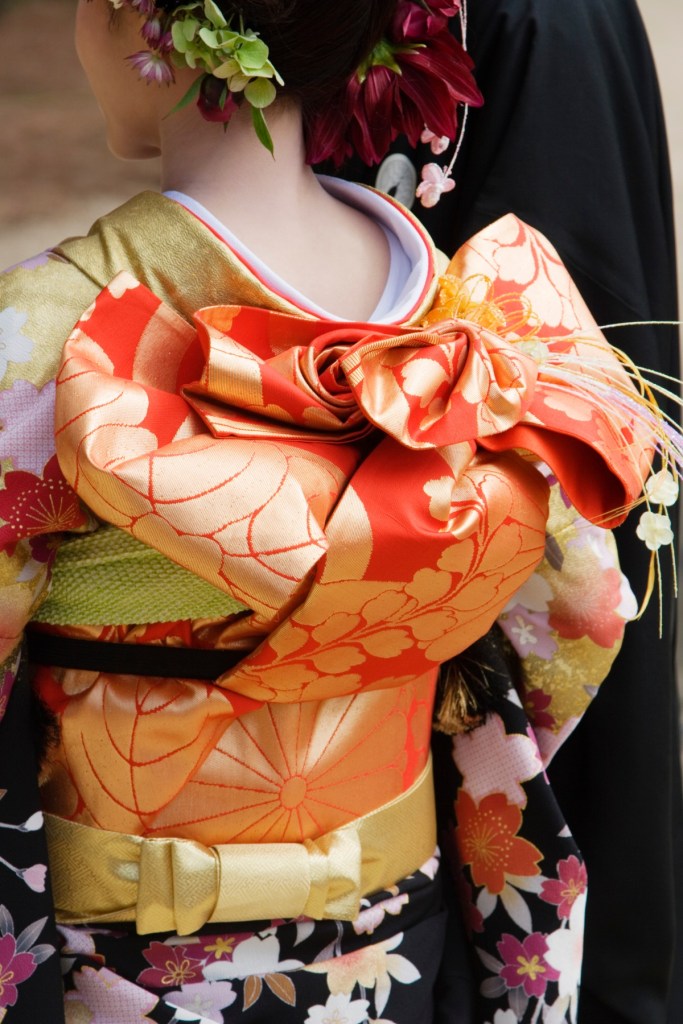
So, at the University of Evandra’s Opening Ceremony, students wear a mix of regular Regency clothing meant for special occasions, or they wear the traditional clothing of their home country (this is for native Sindalians as well as international students).
In the book, Andresh opts to wear his traditional Sindalian clothes, which, oddly enough, never came into my brain as Japanese kimono, but actually the traditional garb from Kazakhstan (see Andresh’s fashion story here). I chose this style of clothing after doing a lot of research for the 2013 version of The Name and the Key, and while Andresh’s coat isn’t magical anymore or fancy, the influence from Kazakhstan stayed in my brain. Otherwise, more cultural things from Japan made its way into The Step and the Walk.
In Sindalia, it is common to eat food with chopsticks. I made a dish reminiscent of udon noodles to replace rice as the meal staple, and I made up a national delicacy called “moonfish in umber sauce” based off of a one-time amazing meal I had at Joyfull (a Japanese chain restaurant kind of like Denny’s or Applebee’s) that was seasonal and disappeared off the menu so I could never find it ever again. It was the best fish I ever had, although the bones were left in it and that was a challenge. The fish melted in my mouth and the brown sauce it was cooked in was amazing. I’ve never forgotten it, so into the book it went!


Another aspect of Japanese culture that went into The Step and the Walk was bowing. I bowed all the time in Japan–in greeting, in farewell, in thanks, and when I was apologetic. I always liked this, though not everyone is a fan. I think it’s a quick, simple way to convey a message or show respect, and it took me forever to break the habit of doing it when I came back to the States (although sometimes I still bow to show appreciation).

This pops up in the book when Andresh realizes that Sebastien, a student he has a crush on, never bows to people, and neither does his sister. They are not native to Sindalia but they have no excuse not to know the culture, as they are university students and can speak the language–bowing should come naturally to them with their interactions. Andresh tries not to think about it, but the two of them refusing to bow is a red flag that bothers him. He finds out later from a friend why, and it’s not a good enough reason.
Ooh! I forgot to mention this one when I was talking about school traditions–a big one is the Culture Festival (bunkasai). This was one of my favorite things about teaching in Japan. This is an event put on by the entire school, with different activities, displays, and performances put on by the students. Festival food is commonly served (I always ate the yakisoba) at these events, and this served as my inspiration for Welcome Weekend at the University of Evandra.
I remember at the Kamoto Shoko Culture Festival they had an interactive tent where you colored in a character on clear plastic, put it in a machine, and then it became thick, hardened plastic that was made into a keychain. I have no idea about what materials they used, but I made a Pikachu and always remembered this event. This inspired the glass-making scene in The Step and the Walk, mixed in with a childhood memory of doing the same thing at the Art Center in my hometown as a child.
Some final words…
When I write my books, I think about a lot of my own experiences when it comes to where I’ve travelled and the things I’ve done in other countries. I don’t mean (or want to) culturally appropriate, but these experiences have shaped my life, and I love how it influences things when I write. It’s how I prolong the memory and the love for what I’ve been through. I will always be grateful for the times I’ve had, and what I’ve learned about different cultures and places. I love sharing my influences, and I hope you find it interesting!


Leave a comment