

The Shikoku Henro is probably the greatest, most challenging, and most famous pilgrimage in Japan. It consists of visiting 88 temples in a giant circle on the island of Shikoku, and if you really want to go out with a bang (and do it properly), ending it on Koyasan in Wakayama prefecture at Kobo Daishi’s mausoleum.

Kobo Daishi (also known as Kūkai) is the monk who founded the esoteric Shingon school of Buddhism, and the 88 temples of the pilgrimage are all associated with him. You’ll see many statues of him as you go on your journey to the temples.
I had heard of the pilgrimage before heading to Japan, seeing an episode about it on NHK’s Journeys in Japan television program, which I watched religiously before I knew where my placement would be on the JET program.
In 2017 I had started my second year on JET and got invited by my friend Ara Mahar to go to Matsuyama, Ehime, to watch them participate in a karuta tournament. In our free time, we decided to visit some of the temples on the Shikoku Pilgrimage route, just to see them and collect goshuin.
Well…after doing that and seeing a handful of temples, we decided to just do the whole thing! We couldn’t help ourselves!
We made a total of four trips to all 88 temples and Kobo Daishi’s mausoleum at Koyasan. We didn’t have a lot of free time because we were both assistant English teachers and couldn’t miss school, so we did a lot of travelling on holidays like Golden Week to complete the Pilgrimage. Also, we drove it, although there are plenty of places cars can’t go, and you have to hike anyway. So it’s not like this was an easy vacation by all means.
First of all, Shikoku is a gorgeous island. Here’s a video of the scenery that surrounded us when we were at a lookout station above one of the temples (I don’t remember which one it is, or which prefecture we were in, sorry. I won’t be able to remember any details like this for this post because it’s been almost ten years).
Shikoku is full of beautiful beaches, lush forests, and challenging mountains, and we travelled in every kind of weather while we were there–snowstorms in the mountains, rain, hot summer heat, sunny days at the beaches, etc.
I saw so many beautiful things while on the Pilgrimage. Temples usually have a very humble look to them, but they are often filled with gold statues, decorations, and sacred items. [EDITOR’S NOTE: I originally had four photos and a video, but these were all of the altars at the temples, and while we did get permission to photograph them, I did research after posting and it says it is bad form to share them, so I have deleted them.]
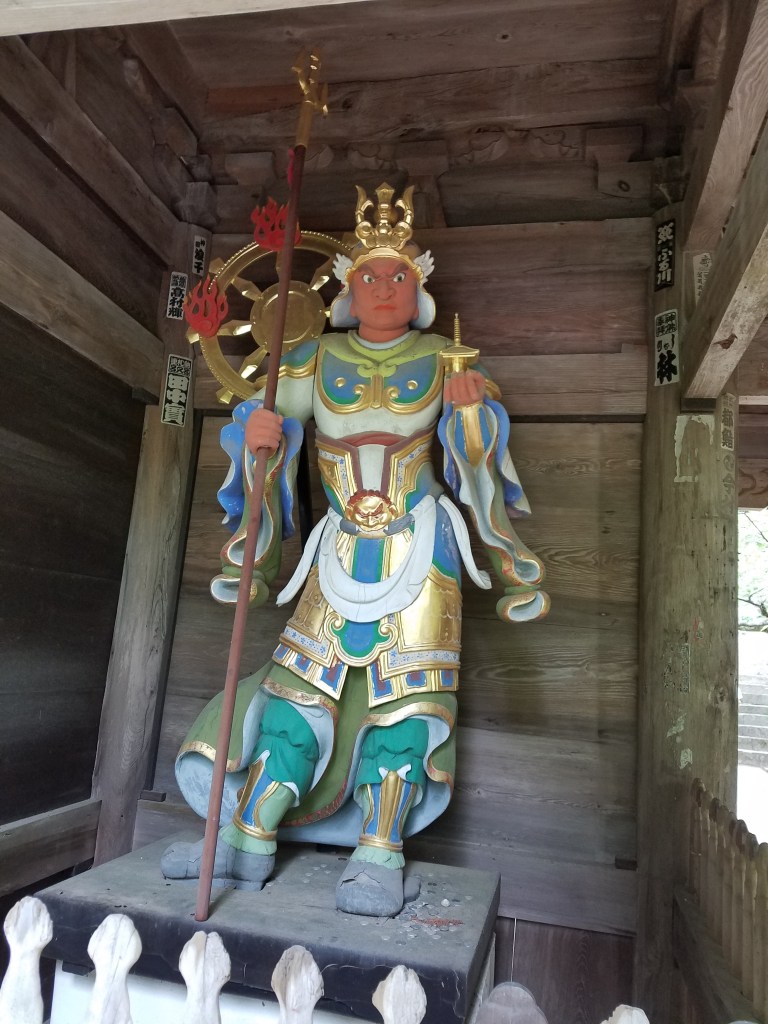
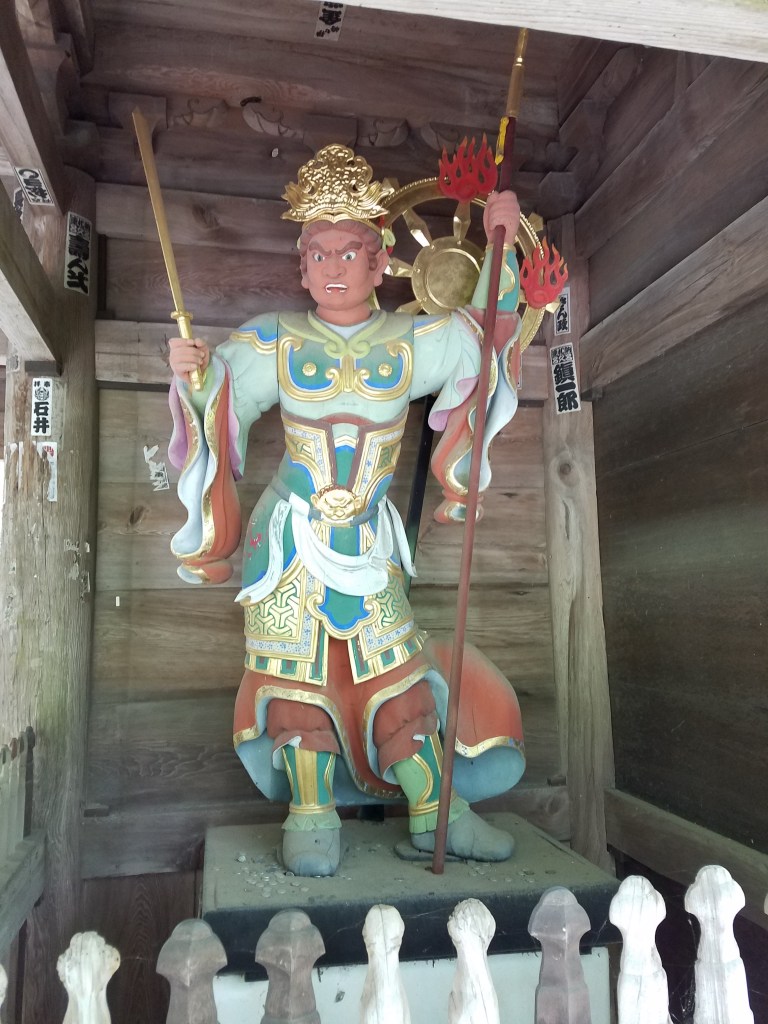
When you approach the temple, there will be a gate called a Niōmon, which houses a statue of a guardian on the right side, and the left side. These statues are called Niō, which means “Two Kings.” We saw Niō at every temple, but here are some newer-looking ones (or at least their paint is really bright!).
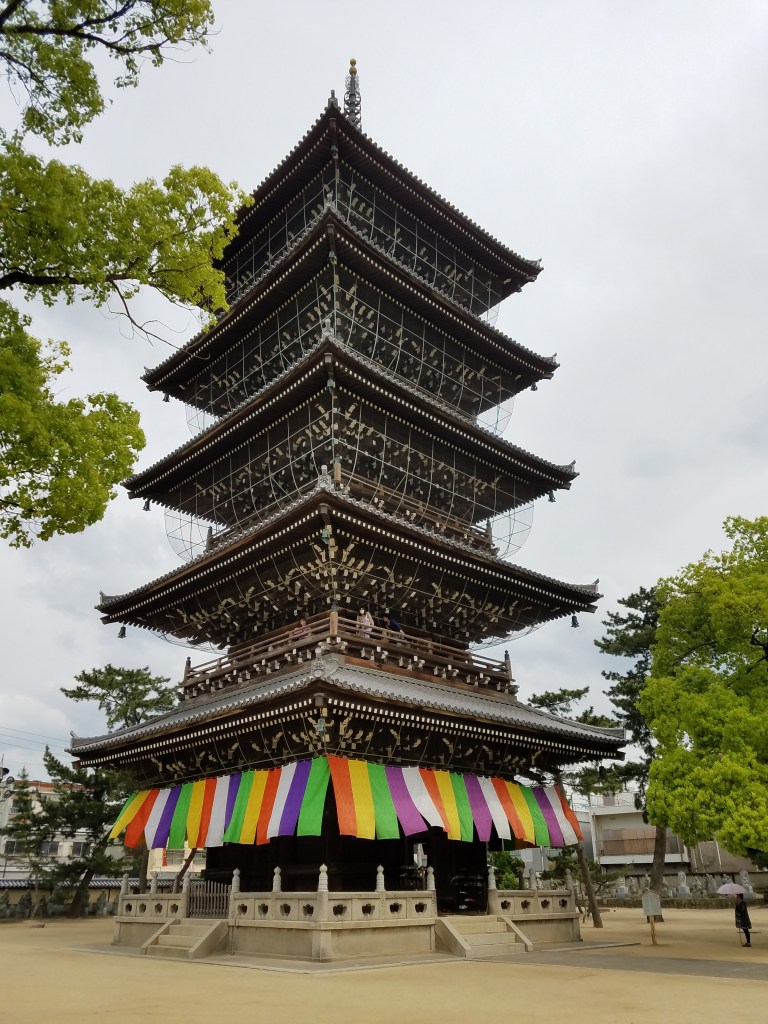
Pagodas are also a common fixture at Buddhist temples.
We also saw a lot of sculptures and statues. One of my favorite temples had a forest full of statues that went down along a pathway. Here’s a photo of one part of it:

Here’s a closeup of a statue holding a toddler. Someone balanced a 5-yen coin on their fingertip as a fun offering!

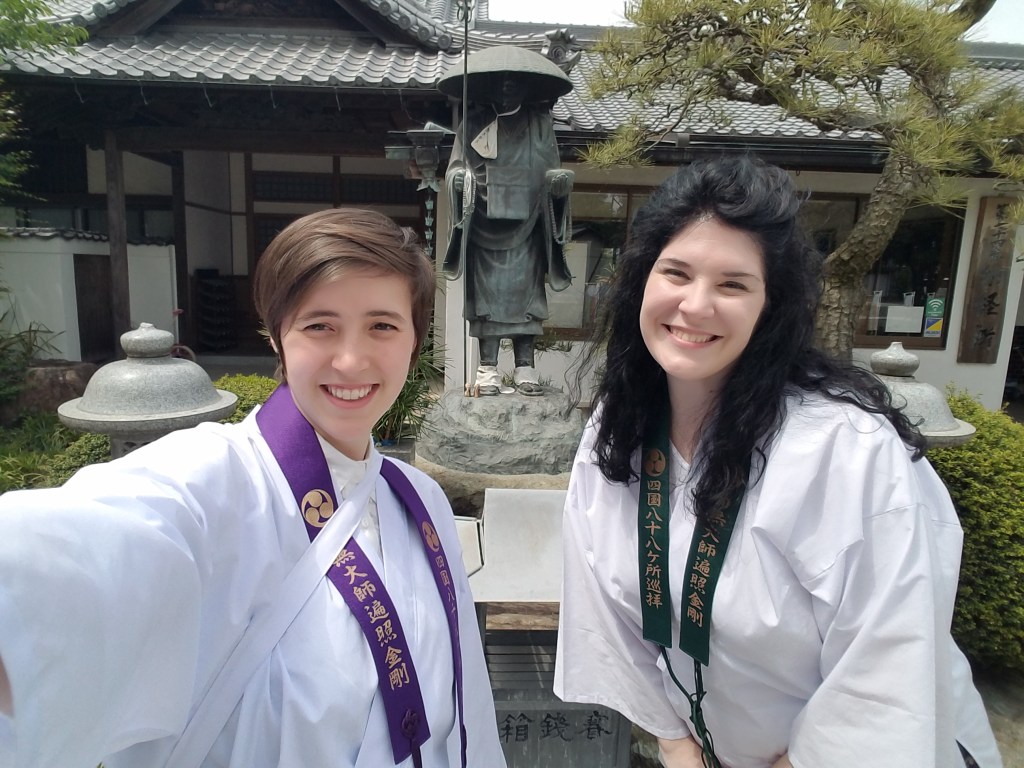
We also made sure to take some fun selfies at different shrines, too. I love all three of these.
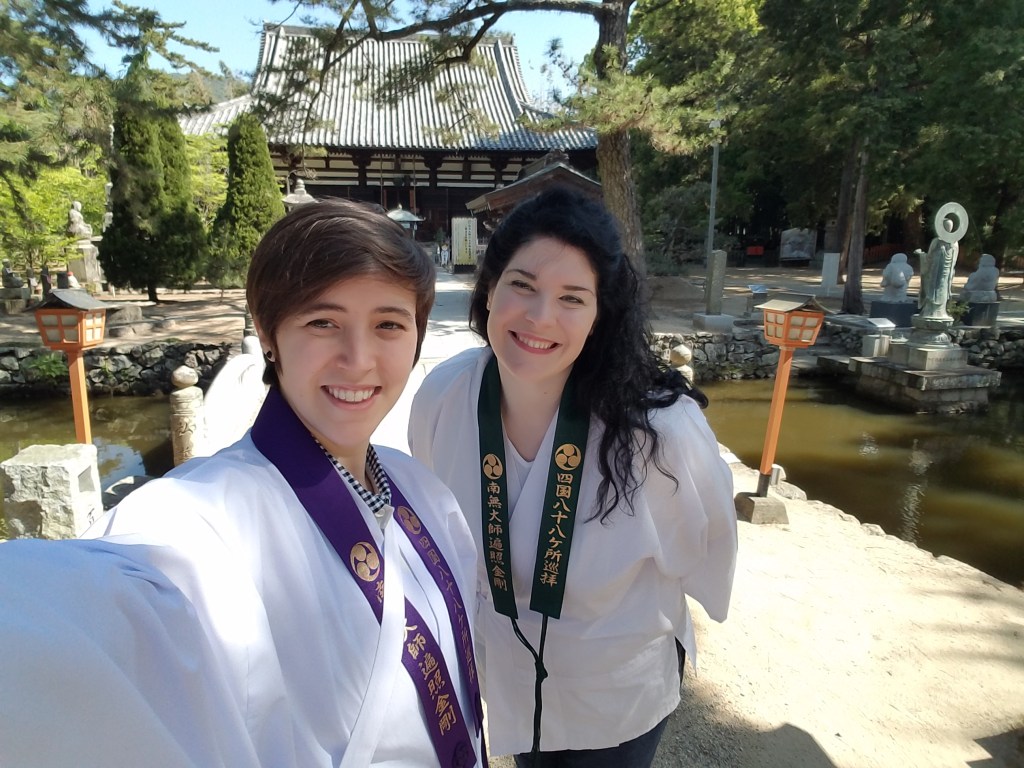
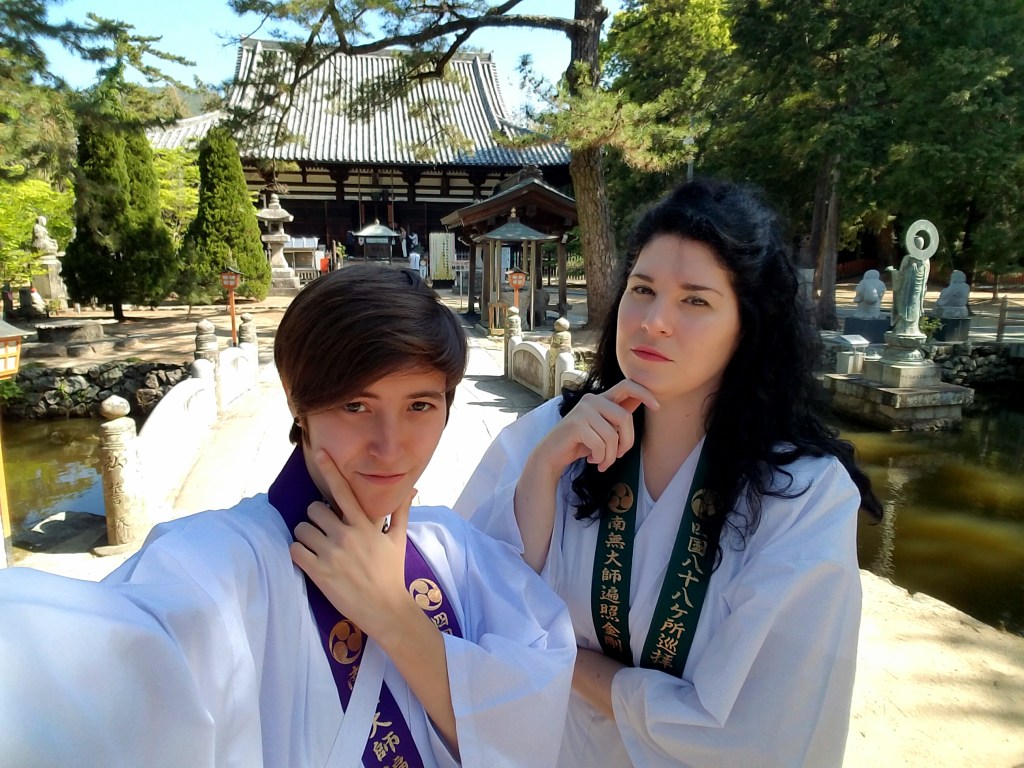
We did the Henro 2017-2018. Unfortunately all of my photographs from the pilgrimage are missing, and I could only find the May 2017 photos from Golden Week travelling…and then two pictures Ara took of me during our final leg of the trip.

This one is of me at Koyasan. We did triumphant poses. Here is Ara’s that I took of them:
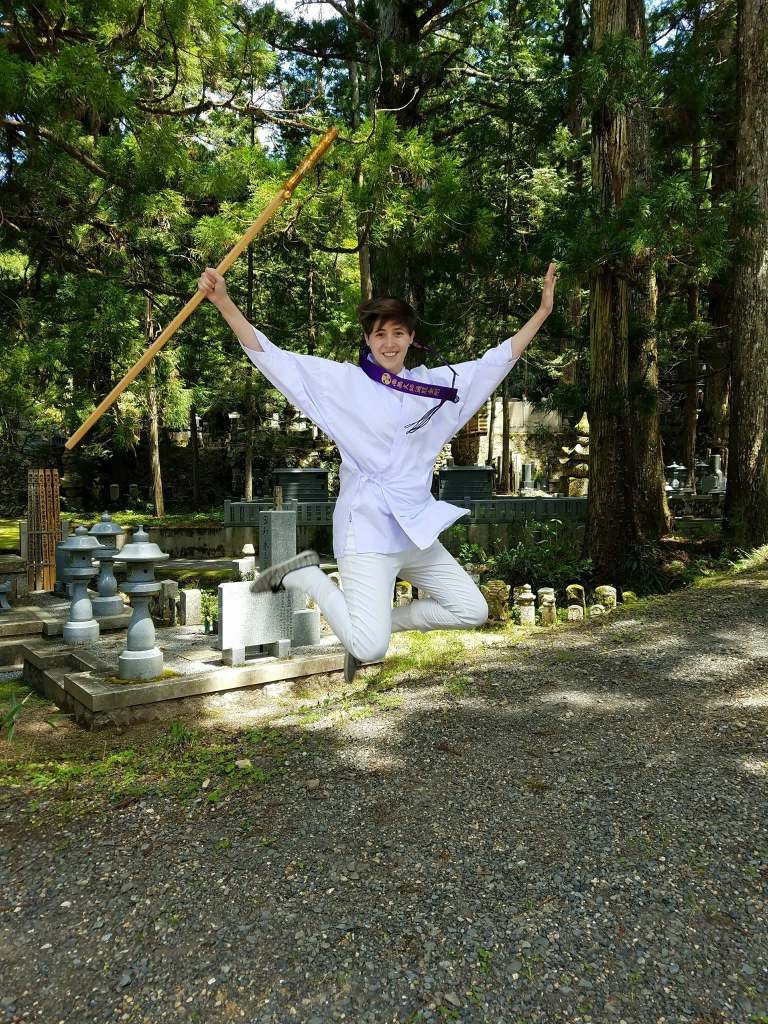
Here’s my triumphant pose. I wanted to do a ballet pose, my favorite: attitude derriere. I hadn’t done ballet in over a decade so I could only hold this pose for .02 seconds but Ara caught me before I fell over!

We took turns each trip switching out our kei cars, and taking turns driving. We spent so much money on gas, tolls, ferries, food, and housing. We stayed in Air BnBs in a lot of memorable places, like the attic in someone’s house, or a cabin at a campground, for example. We made sure we bought our special attire for the pilgrimage: sedge hat, white tunic, walking stick, and stole, and then our goshuincho meant especially for the Pilgrimage. I also bought omamori and beaded bracelets while I was there, too.
Ara and I have talked about someday going back to Japan to do the Pilgrimage on foot. I would love to do this, but my health won’t allow me to–I need a lot of work. The Pilgrimage is 750 miles (1200 km) and that is a ton of walking. The little bit we did in the mountains really kicked my butt, and I was much, much healthier then. So, for me, this one will have to remain a dream, but it’s my hope Ara will make theirs come true.
Ara and I made some of the best memories in Japan while doing the Pilgrimage. So many incredible sights in nature, and then the temples themselves also have their own beauty and majesty, too. I’m sad I lost my photos, but the places we went to will always stick in my mind.
I hope, if you go to Japan, you give the Shikoku Pilgrimage a try! It’s a time and health investment for certain, but so, so worth it!


Leave a Reply