This review first appeared on The Beat.
What is considered “normal” for a 30 year old? Should she be married, have a carreer, live independently…?
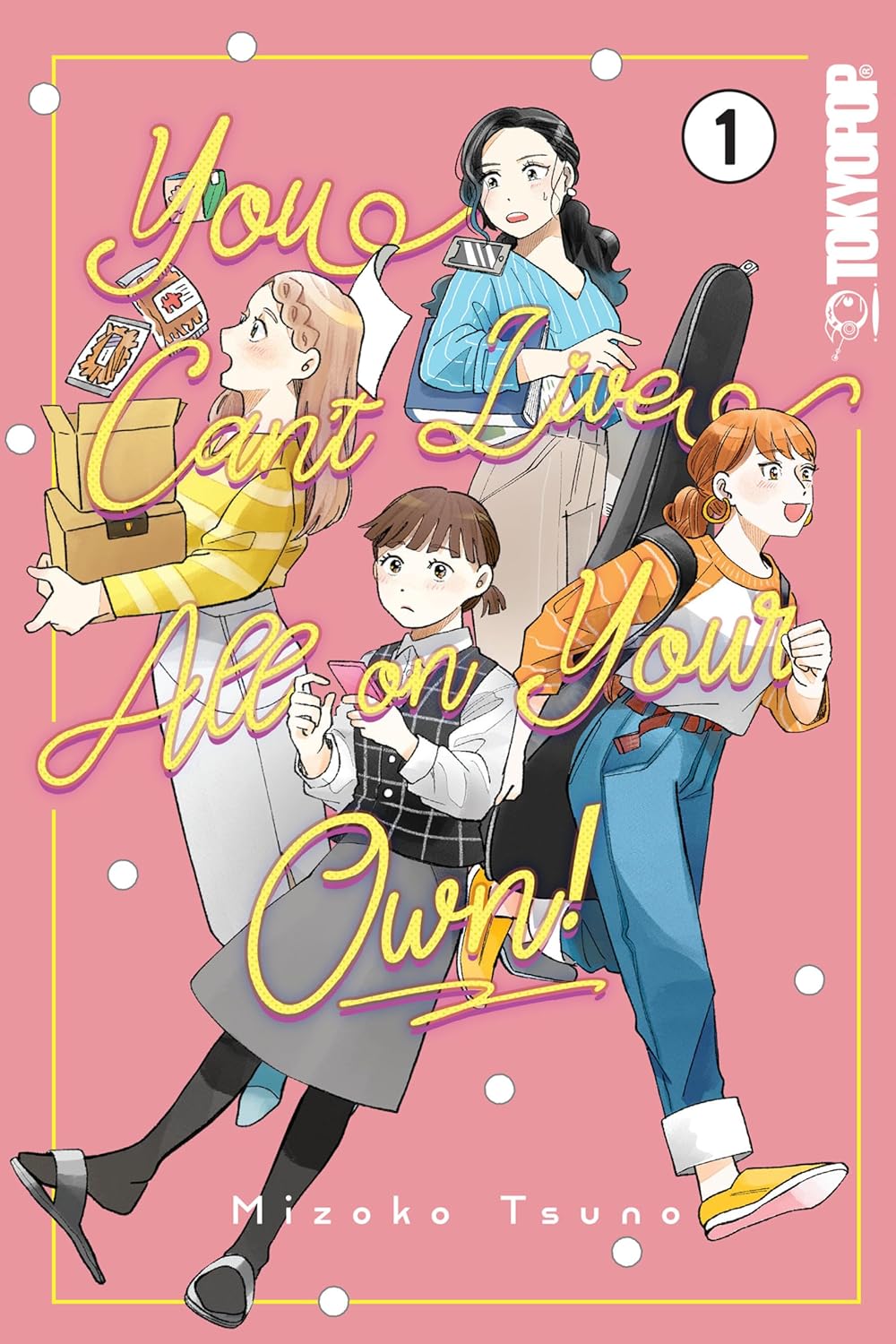
A cute and quirky slice-of-life manga about four women who are roommates.
Shuuko, Eika, Misaki, and Shio are roommates and friends making their way in the busy world of Tokyo, Japan!
Though they share an apartment and a friendship, each faces her own unique problems. Shuuko is feeling the pressure of those around her getting married and has no idea whether she’ll truly be happy on her own for the rest of her life. Eika, a hardworking career woman, wants to prove herself to the judgmental men in her office. Romantic and idealistic Misaki is spurred into action when it turns out her “boyfriend” of two years didn’t know she thought they were dating. Nurturing and good-spirited Shio struggles to set a work–life balance while paying her many bills.
Join these four roommates as they navigate the biggest question of their late twenties: What does happiness really mean?
Can happiness be found even when life seems to pass you by?
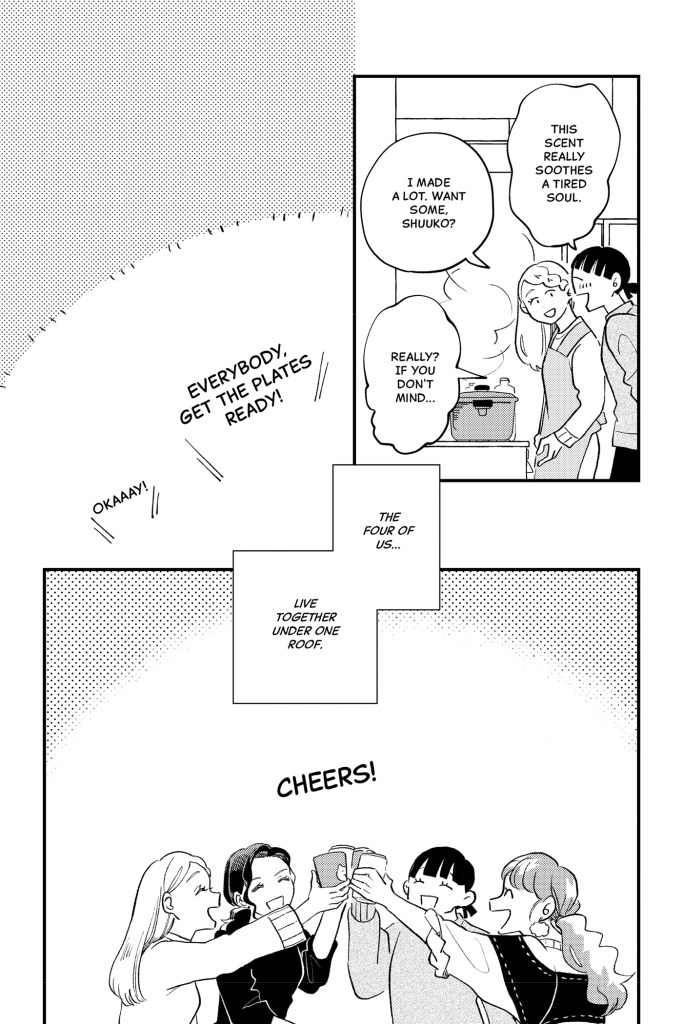
Four women with different goals, jobs, and personalities all live together in an apartment in Tokyo. They get along with each other well, and share food and drinks when they can, along with their latest problems and advice.
The story starts with Shuuko, who is a 29-year-old office worker feeling the clock ticking. It seems like everyone around her is getting married, and she questions whether or not she is happy being alone. Then there’s Eika, the career go-getter who works incredibly hard not only for herself, but to show the judgmental men in her office that she’s a highly capable woman. Misaki, a musician with a romantic personality, is brokenhearted when she discovers her boyfriend of two years didn’t think they were dating at all. This total misconception of their relationship brings about tears, then determination, as Misaki vows to win her “boyfriend” over and make him commit to a serious relationship. Lastly, Shio works remotely in the apartment and shows her affection through the delicious food she cooks for the household. The only problem is, she is paid very little and can’t keep track of her spending.
While each woman gets her time to shine with her own chapter in the manga, Shuuko’s story dominates and more time is spent on her, so it would be safe to call her the main character. Her story feels more complete, too, even though it isn’t finished yet, as we see her attempts to change her life by going out to matchmaking events and dates. Her story is the connective tissue.
Each roommate is at a turning point in their lives, where they have to figure out if they are happy or still pursuing happiness. They all have very different goals from each other, but also, they enjoy living together and have a hard time imagining what life would be like without roommates. They support and care for each other deeply. Doesn’t that make them happy?
This manga is a successful examination of the limbo people can feel stuck in when they are no longer a child, teen, or even early adult. There’s this checklist of life events that you’re expected to have met within a certain timeframe that’s unfair and doesn’t consider everyone’s circumstances. Some people can’t learn to drive at sixteen. Some people don’t start college at eighteen. Some people never find a career or own a house or have kids, let alone all of that by their twenties or thirties. And yet the pressure is there to have things mastered by a certain point in life. This manga hits that hard as each character is striving to meet their goals but wonders if those goals are what will ensure happiness once they’re met.
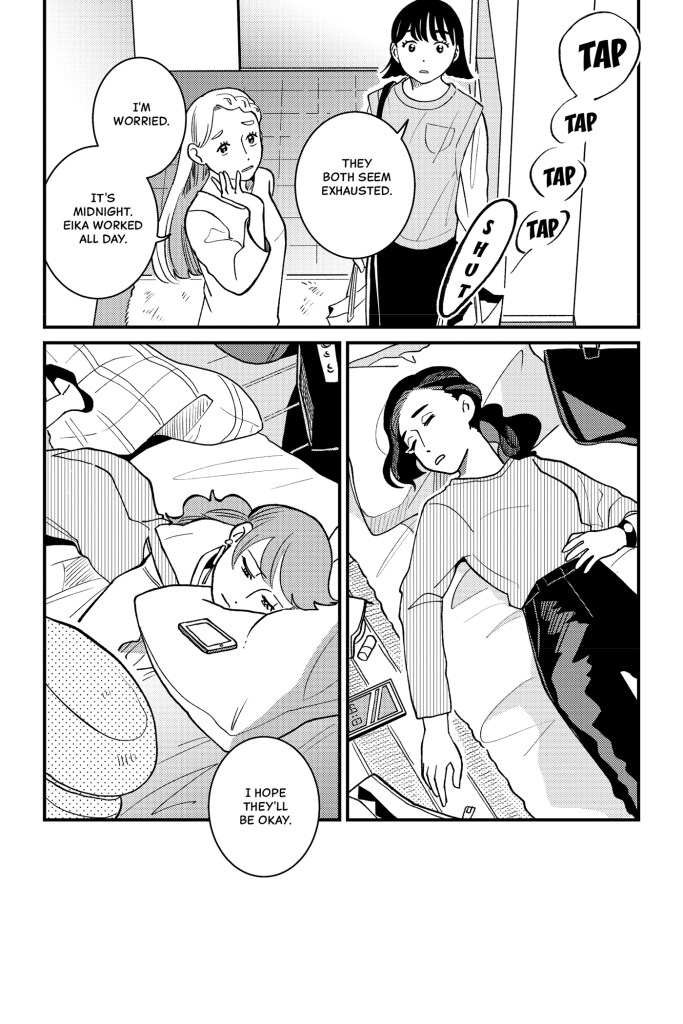
I’ve felt at times just like Shuuko in this panel:
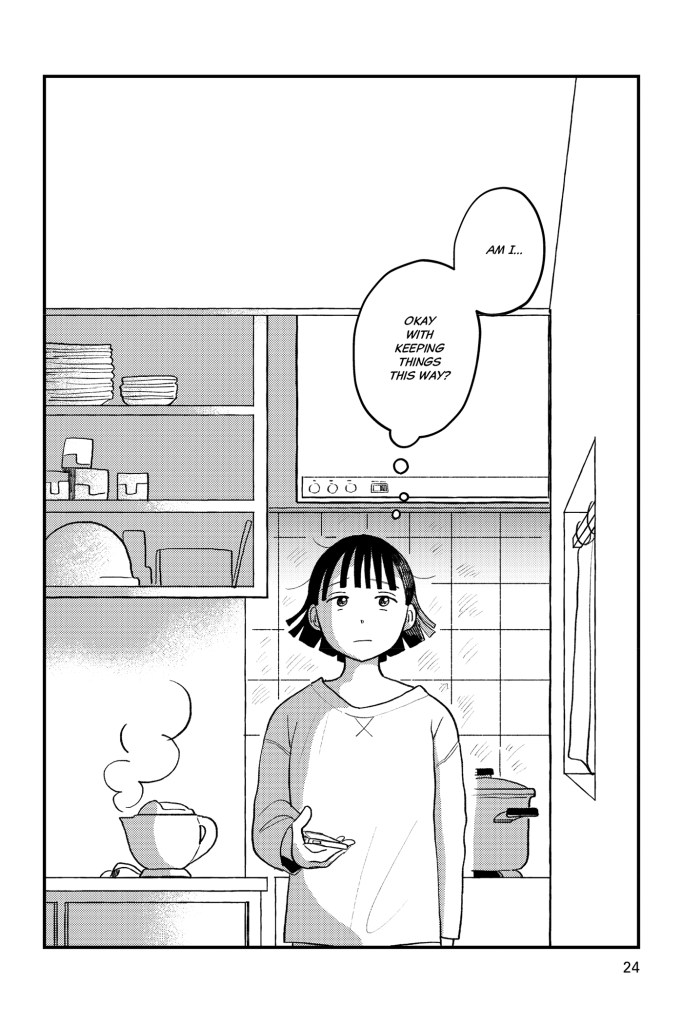
And that’s what makes You Can’t Live All On Your Own so appealing—you can empathize with the characters and their personal crises. As I mentioned before, a lot of people worry that they haven’t achieved certain goals by a certain point in their life, and experience that feeling of being “stuck” or unsure if things will get better or not. I think readers of this manga will know what it feels like to wonder if they should accept what they have, or strive for change, all for the sake of happiness.
The art of the manga is pretty straightforward. It’s not that the characters aren’t uniquely depicted or expressive, it’s just that there’s nothing unnecessary in their depiction, and characters aren’t overtly ugly or strikingly beautiful. The art feels honest, in that we see these characters for what they are–real people. The fact that the lines are rounded, thick, and smooth contributes to the art’s clarity. It’s a highly contemporary style of manga for adults that evokes other manga such as Hirayasumi and How Do We Relationship?
I enjoyed reading this manga quite a bit, but if there was anything I wished was different was the exploration of Misaki and her “boyfriend’s” relationship. I reacted just like how the other women in the manga did–how do you see each other for two years, kiss and sleep with each other, and not be considered dating? The whole premise seems ludicrous to me. But this is someone’s reality–someone out there has gone through this–so I can’t judge Misaki too harshly for the way she responds. I just think out of all of the relatability readers can have to the characters, this one may be a little harder to pull off.
You Can’t Live All On Your Own is a solid addition to the slice of life genre for readers who can understand what it’s like to struggle with money, work-life balance, romance, and the “life checklist.” An entertaining manga with sweet moments, and relatable ones as well, this series makes you question what happiness could be for you, and if you can find it for yourself.
You Can’t Live All On Your Own is at three volumes, all published in 2025. You can buy them directly from the publisher or anywhere books are sold online. Print and digital are available.


Leave a Reply