

I was watching a YouTube video where they talked about a graph going around that shows the insane growth of published eBooks ever since ChatGPT entered the fray.
I have found the graph, posted here on Reddit. Here it is in all of its glory, and it is scary:
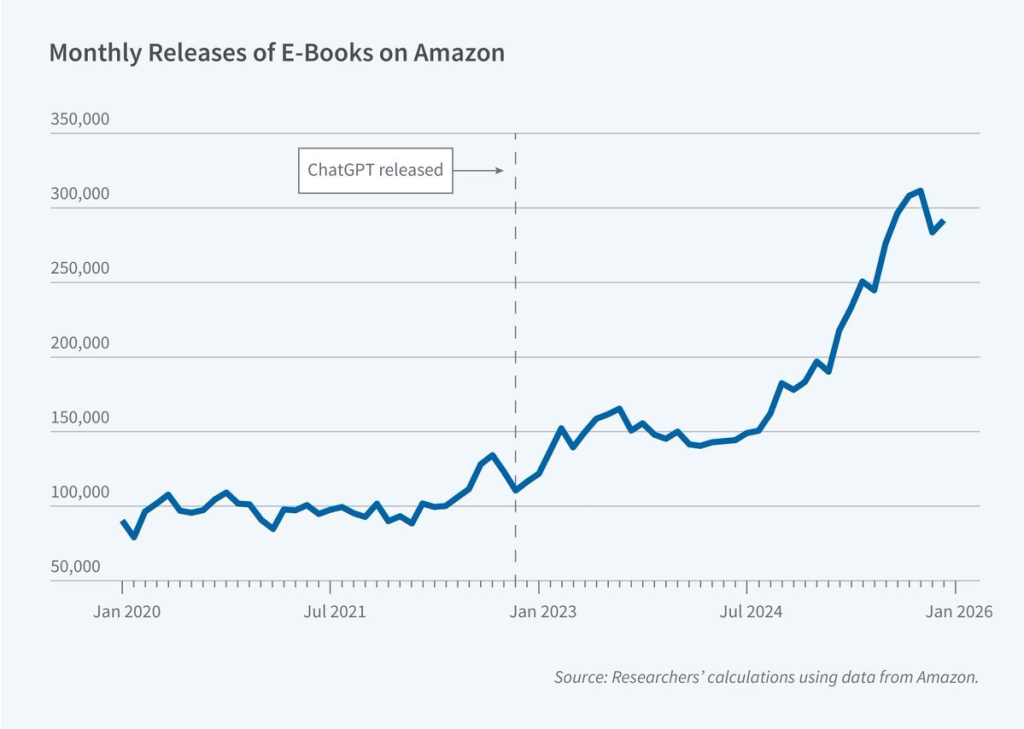
The common conclusion to this graph is that thanks to the release of Chat GPT, more eBooks have flooded the market–over 300,000 just before January 2026. It’s a huge uptick in publication, and as an author–a human one at that, I want to know–
HOW CAN PEOPLE FIND MY BOOKS IN A SEA OF SLOP?
To pull from an article from Startup Fortune:
A flood of low-cost AI-generated titles in a niche competes for the same visibility signals that a genuine author spent months building. An AI publisher can produce fifty titles a month, spread them across related categories, buy a small number of reviews, and create enough noise to push legitimate titles further down the search results. Even if each individual AI title sells almost nothing, the cumulative effect on category search rankings is real. The authors who built their livelihood on KDP are now competing against what is essentially an inventory machine rather than a publishing market.
My books are already really, really hard to “find.” You can’t find The Name and the Key just by typing the title into Amazon’s search bar–you have to add “butke” or the book will never show up in results (at least Son of the Siren doesn’t have this issue, but it took a long time for that book to be searchable on Amazon, too).
Around July 2024, when my first novel was published, according to the Amazon chart above, my eBook of Son of the Siren was competing with about 150,000 other books. That is a frightening amount of books to swim through, and I have not cracked the code into getting the book more “seen” since then.
When The Name and the Key publishes July 2026, will I be in a sea of 300,000 other books this time? How, how can someone find my work in all of that?
I’m strongly anti generative AI. Chat GPT and LLMs are expressly forbidden in my classrooms (my students use them anyway) and they make me so, so angry. Writing is not easy, but it is so rewarding, and nothing can overtake the power and beauty of human-written stories. LLMs can’t think. They can only reproduce stolen works based on what the end user wants to hear.
And yet. There are so many stories out there of people promising to train you to write with AI and telling you that you an make “six figures” off of doing so. Because writing books has always been easy money, right?
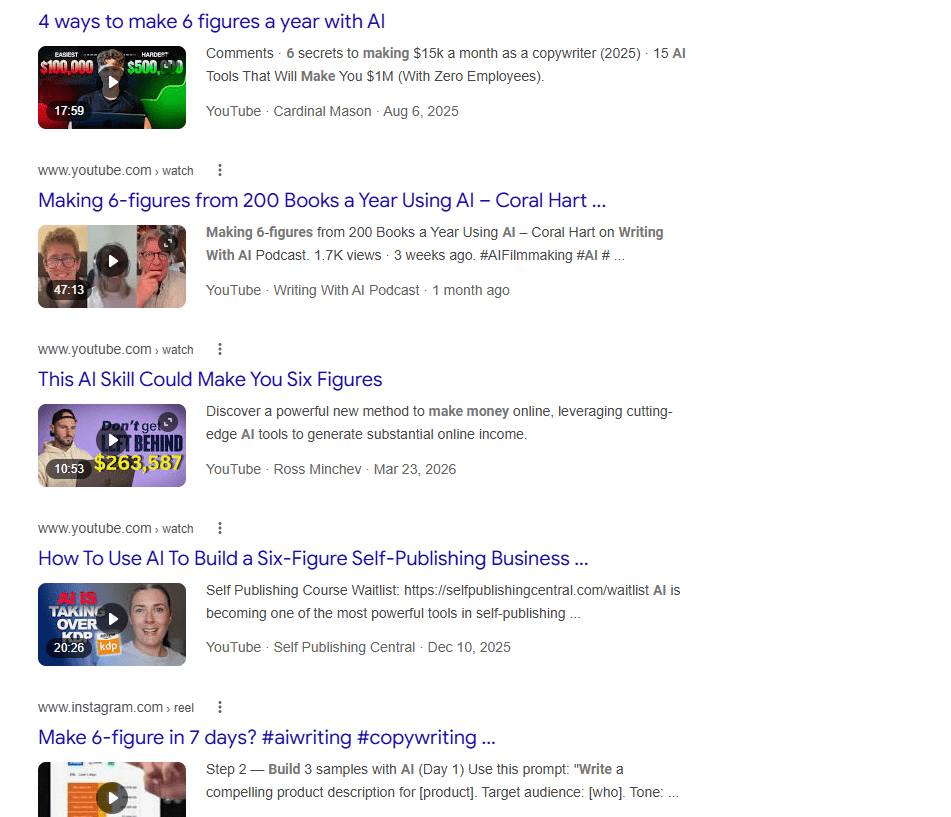
Then there’s Coral Hart, the pseudonym of a romance genre AI-user (formerly traditionally published author) who generated 200 books using AI and managed to scrounge six figures from it, according to the New York Times. One of her most infuriating quotes is that “if I can generate a book in a day, and you need six months to write a book, who’s going to win the race?” While publishing at the end of the day is a business, and readers are consuming a product, art is usually not separated from that. Writing, and books, are considered to be art! But here, Hart is treating art creation like content creation–a product simply to be pumped out for consumption. I will never call someone like this an author.
Daniel Greene has a better scoop on this story than I could offer:
Anyway, the promotion of using ChatGPT, Claude and other LLMs to “write” books for the purposes of walking away with cold hard cash is so…insulting to me. Most writers don’t make that kind of money, and use their blood, sweat, and tears to create their works. Having AI slop sell six figures, place on bestseller lists, and create “careers” for aspiring “authors” is just a slap in the face.
Booksellers like Amazon and Barnes and Noble (who also have their own publishing arms) have tried to start regulating the outcrop of slop being published. Amazon makes you identify whether or not your work has been written with AI (which, by the way, PEOPLE LIE ABOUT), and utilizes listing caps and batch limits (three books per day; human verification required for ASINS of over 500 submitted). Barnes and Noble has limited publishers to only 100 books per account.
I don’t know how this will work out.
There is a noticeable backlash against authors and artists who use AI–if you are discovered using it, there is a huge stain on your reputation (which is why Coral Hart will not identify herself outside her pseudonym for the New York Times). This is why Amazon having you check a box to ensure your book isn’t AI written isn’t enough (because people lie to avoid the backlash/being caught). Sloppers are just going to slop.
I think the greatest issue is going to be discoverability for human-authored works. Publishing has always been competitive in terms of books being seen. Unless big publishers have a marketing team throwing money behind your book, you have less of a chance standing out among a sea of other works. AI-generated books are only going to drown other books. Readers will be upset by the lack of quality out there and spend less in order to lower their risk of buying trash books, only selecting books that are vouched for by major publishers, other authors, and hundreds of readers. Which…is not something every author can get (for example, my agent asked twenty authors for blurbs for Son of the Siren and most authors just ghosted us. I haven’t been able to get editorial reviews without paying for them. And Son of the Siren only has 26 reader reviews on Amazon despite being out since 2024.) I don’t think self-published authors or indie-authors will be abandoned by readers, it’s just…it’s going to get a whole lot harder to stand out when 200,000 out of 300,000 books might be AI-generated.
I wish this wasn’t a thing I’d have to think about. And honestly, I try not to. I mostly focus on trying to write the best book I can as I’m writing it, and think, “to hell with generative AI!” But I think the discoverability issues that come up in regards to the mass publication of slop books does concern me.
I don’t have answers, except to just keep writing.


Leave a Reply