A NEW YORK PUBLIC LIBRARY BEST NEW COMIC OF 2026
The Eisner and Lambda Literary Award–nominated creator of Thirsty Mermaids returns with a heartfelt and transporting graphic novel about connection, community, and rebuilding after the end of the world.
Many years ago, a mysterious force swept across the land, reclaiming and forever silencing every source of power. In its absence and over the generations since, the denizens of one rural area have learned to live differently: growing and trading their own food, preserving old knowledge in danger of being lost, and relying on one another to survive.
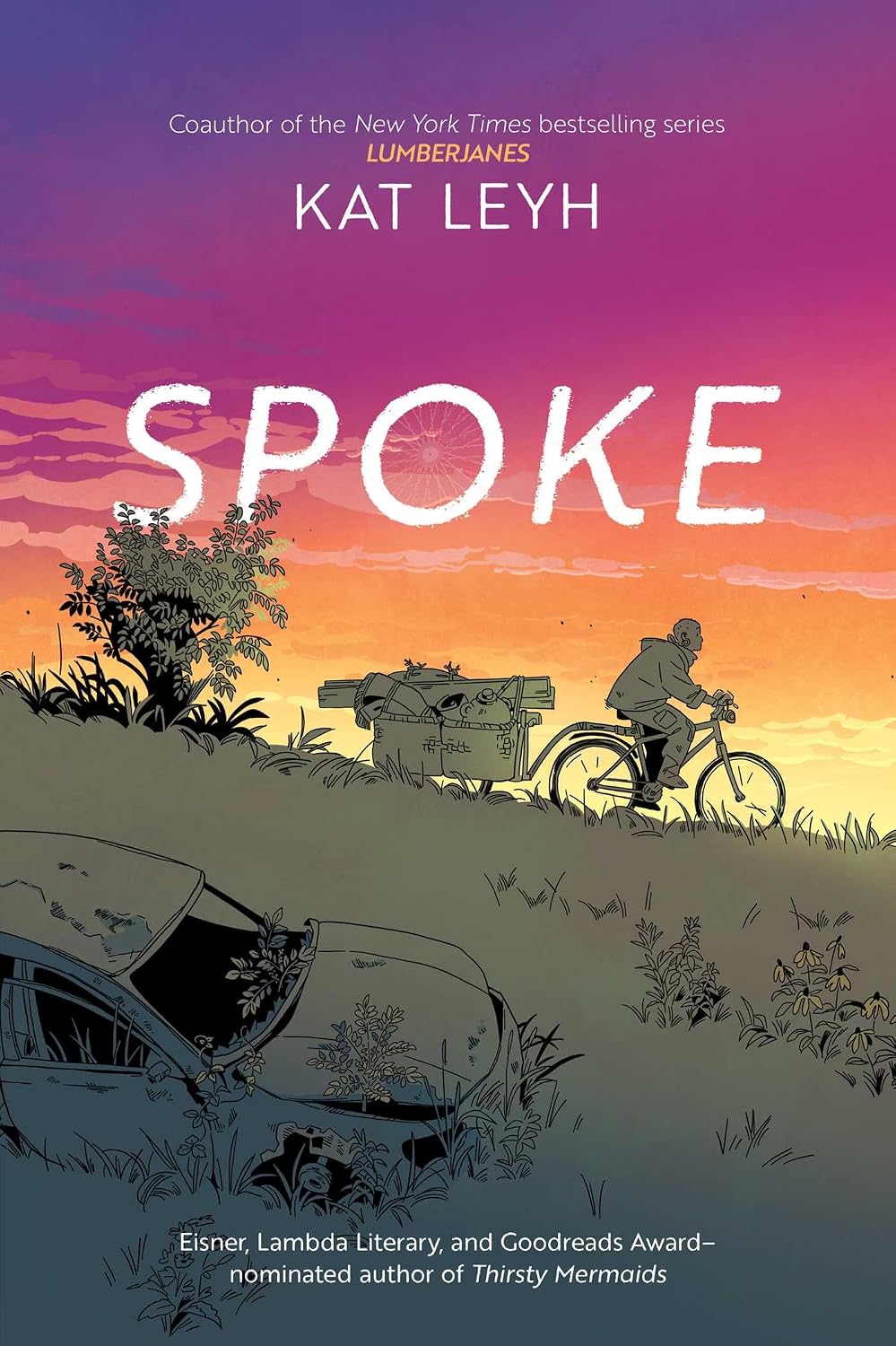
Spoke knows the winding roads of this place better than anyone. A Deaf courier who communicates through sign language, Spoke spends her days ferrying deliveries between scattered villages and settlements, moving quietly through the surrounding land with only her cargo bike for company. Though she’s welcomed almost everywhere she goes, Spoke has nonetheless built her life around routine and solitude.
But when a series of deliveries draws her into the orbit of trusted friends, ancient tales, and a traveler who perhaps understands loneliness as deeply as she does, Spoke begins to imagine a larger life than the one she’s always known. As seasonal changes roll across the landscape, the fragile connections between these communities—and between people—suddenly feel more important than ever.
Warm, wistful, and quietly hopeful, Spoke is a beautifully realized vision of life moving forward—and an unforgettable story about the people who keep the world turning.
This is a post-apocalyptic story that paints a hopeful picture of society after the “world has ended.” Spoke doesn’t clearly say what happened–that’s relegated to a mythic story about the stars coming down from the sky and the night coming down to reclaim them–but the major gist of it is that the world is without electricity and everything that we who live in the modern era take for granted.
One could assume that everyone would be miserable in these times, but people have forged ahead and have learned to live well under their circumstances. There are farm villages. There’s an old tower where the town meteorologist lives who keeps track of storms. People grow their food, make their clothes, and forage what they can from the junk (relics) of the past.
Spoke, who is deaf, finds a treasure for herself: a working bicycle! And she wants to help make deliveries and connections between the settlements, transporting items back and forth to people in need.
Spoke is not alone in this new world. She has lots of friends, and you can see how the survivors have learned to live well with each other and depend on each other. The early settlers of the area were a deaf family who continued to have deaf children, so everybody in the settlements knows sign language, as it has been passed down through the years. It’s a wonderful thing to see.
We get stories of the settlements through the seasons, and we see an entire year with festivals, everyday work life, and more. There is a sweet love story amid all of this too, between Spoke and a talented young woman who is studying medicines.
Usually when I hear of stories that chronicle the world’s ending and its aftermath, it’s filled with desolation and the remnants of utter destruction. While it’s clear some things over time have been destroyed in this world, what readers mostly see is the rebuilding and rejuvenation of these spoiled areas, and true friendships and a sense of family.
In other words, this is a story of hope after what could have been the very worst thing to have happened. It’s optimistic and shows how people can come together to survive, and flourish, in hard times.
I did not expect to be so uplifted reading a story about a post-apocalyptic world, but it makes me feel good to see a where coming together after a mass destructive event is what triumphs, not sadness, grief, or bitterness.
I really enjoyed reading this one and am giving it five stars. Much thanks to Gallery 13 and NetGalley for the digital ARC.


Leave a Reply