
I’ve been dealing with an exacerbation of anxiety and depression, but largely, HUGELY, anxiety. How that has manifested has been quite awful and I won’t get into the details about it, but suffice it to say that it’s been bad for me for a while.
So bad that I can’t seem to find the energy or focus to work on The Fear and the Flame. I went ahead and got an extension on my contract because I didn’t think I could knock this baby out by January, given I’ve hardly looked at it. I open the document, reread it to get my brain back in gear, and then…I just put it away and sit and worry about it instead. I hope I’ll get over this. I asked for two more months to write as a buffer, and I’m praying that’s enough time and that readers will still be waiting for me. And, in the meantime, I’m hoping things don’t get worse.
I know I’m not the first writer with mental illness to hit a wall or get stuck in a brain fog. There are articles out there about writers having a high percentage of mental illness compared to the general population, in some instances, even more so than artists. But I tried to find helpful articles about how a mentally ill author can deal with their health issues while trying to write, and came up with very little.
What dominates the search results are articles about how writers depict mental illness in their writing. Not a lot about writers who have mental illness. And the two really promising articles I found were paywalled…boo.
So I’ve got just three to share with you. This one is the best. In Sullivan’s article, she mentions that there are neurological as well as situational reasons as to why authors might struggle with mental health. Not all of them apply to me, but the ones that do are: isolation, weird hours, lack of exercise, nutrition issues, and rejection and self-criticism.
Neurologically, she says:
[…] in most people, the right precuneus, the part of the brain that is responsible for coming up with ideas only fires up a few times a day—it’s mostly resting while you go about your business and get stuff done. But in writers and other creative professionals, this area fires up all the time.
It’s what lets us do what we do—we’re always thinking of new ideas and tying what’s going on around us into our memories, experiences, and dreams.
Basically, we can’t turn off the firehose of ideas. And that gets pretty darn exhausting; it makes it hard to focus, hard to tune out the flood of thoughts, and hard to rest and regenerate.
I have a hard time coming up with new ideas for books, but my brain doesn’t stop imagining things or making strange connections. And that can get exhausting, as Sullivan writes.
Another good article comes from Stage 32 ( a hub for directors, actors, writers, and the entertainment biz as a whole), except it focuses mainly on imposter syndrome. This is actually very, very common with writers and can definitely be a source of mental distress. In my situation, I’ve never felt like a “fraud” as a writer. I believe my stuff is genuinely good, and always have. So I don’t have experience with this–I deal more with disappointment and self-criticism when I think my book is good but am depressed no one is reading it, for example. Or when I get really off-the-wall reviews that confuse me. It’s a different type of mental distress for me.
Lastly, the blog at Katherine Clark Mentoring on writing with mental illness has some actionable work you can do that involves actual writing. The goal is to try to produce something, anything, whether from a random prompt, a song lyric, or structured writing like haiku. I think these are very doable and I think I’ll give it a try.
…I didn’t want to leave it here at just three articles, so I thought I’d look into a couple books that may potentially help, too. I haven’t read these or vetted them, but am including them based on their descriptions.
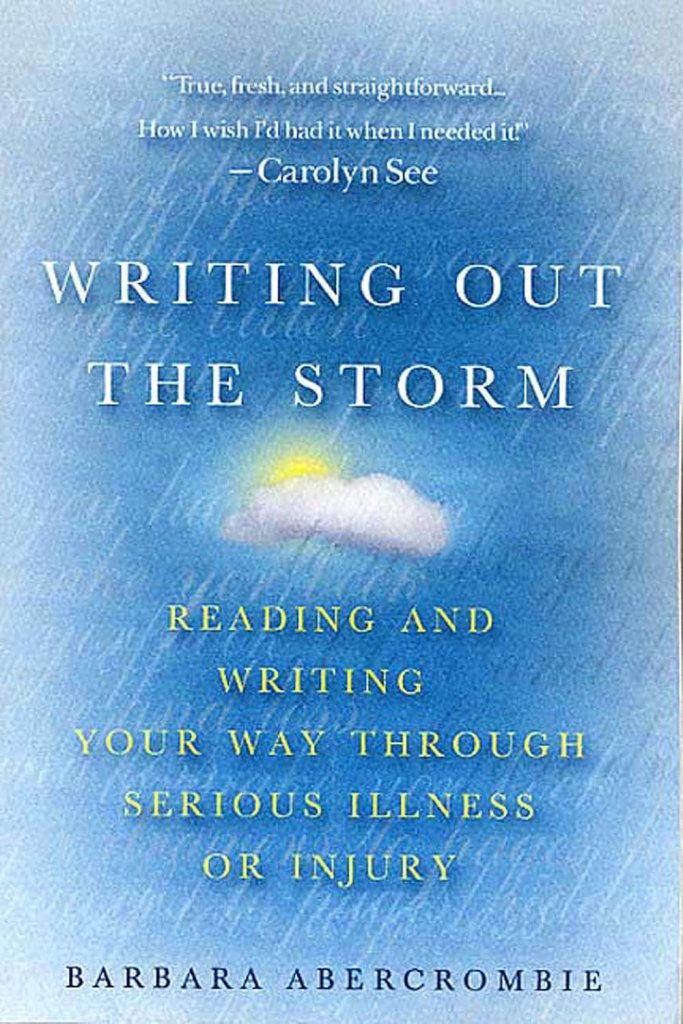
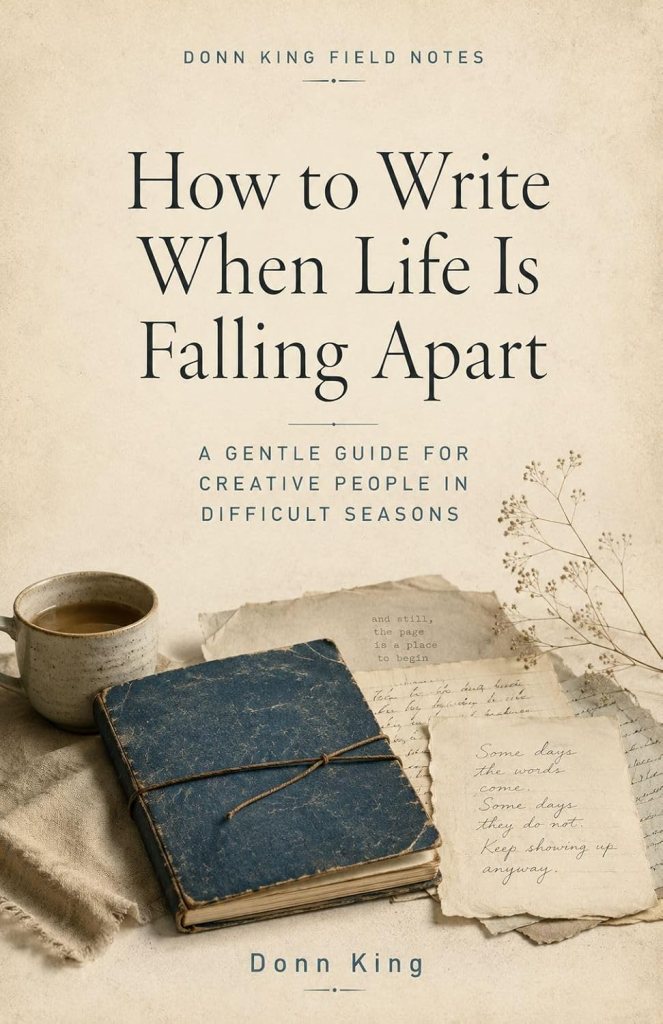
I think How to Write When Life is Falling Apart might be the one for me!
…I didn’t want to just write a “woe is me” post, but at least have some sort of helpful info in it to any of my readers in the same boat as me. I hope there’s something in this post that will make you feel like you aren’t alone, or lead you on to seek out better advice. I wish you well.
In the meantime, I’m going to keep trying to get better and try to get my brain back into the writing mode amidst the 9,000 other things I’m doing. Please wish me luck!


Leave a Reply