

Amid all the BL and manga and comics, sometimes I’ll squeeze in a writing or publishing reference book. I thought I’d share the two most recent I’ve read, and talk about what they mean to me/how they’ve helped me.
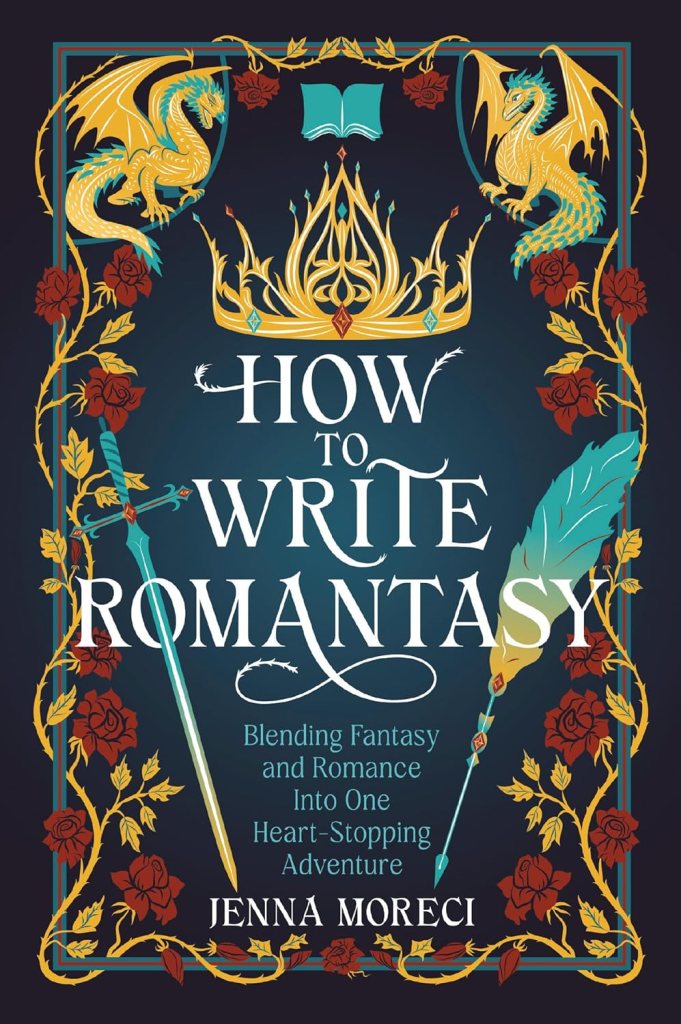
I read this one a few months ago because while I’ve been drafting The Step and the Walk, I’ve had second thoughts about whether or not my trilogy is “romantasy” enough. There are some scenes in The Name and the Key that build up, but don’t count as full-on spice, because I’m trying to spread the romance out over three books. Slow burn for the win!
The Step and the Walk has a completely different romance in it, and it’s doomed from the start. It’s not really supposed to be all that romantic except to Andresh, who’s just trying to fill a hole in his heart. So…I don’t think Book Two counts as a romantasy, either.
Book Three, The Fear and the Flame, is probably the book that will full-on fulfill the romantasy requirements. A couple reunites, and I think I’ll be writing my first-ever sex scene, which has me terrified.
Hence me picking up this book.
I have so many self-doubts about the books in The Darkening Gate that I sought out this writing reference to ground myself. It has a lot of interesting things to say about combining romance and fantasy, and I really loved all of it and found the advice helpful, except the statement saying where you can skimp on worldbuilding a little because the romance should dominate. The book doesn’t say to skip it, but that you don’t have as much of a genre requirement to deeply world-build like the straight fantasy genre does.
I don’t know how I feel about this. When I watch BookTubers critique romantasy, they always say the worldbuilding is underdeveloped or tacked on. I don’t want to fall into that, so I’m going to world-build like a fantasy writer, but only with what is necessary. I tend to get a little more sparse. I’m no Robert Jordan or Brandon Sanderson or J.R.R. Tolkien. I’m trying to be more like Hayao Miyazaki.
ANYWAY!
I found the section on creating a swoon-worthy ship, and building physical and romantic chemistry to be the most helpful to a writer like me who’s just dipping her toes into writing something more romantic than ever before.
I gave this book four stars on Goodreads (it would’ve been five if it wasn’t for the take on worldbuilding) and I highly recommend it to aspiring romantasy authors everywhere.
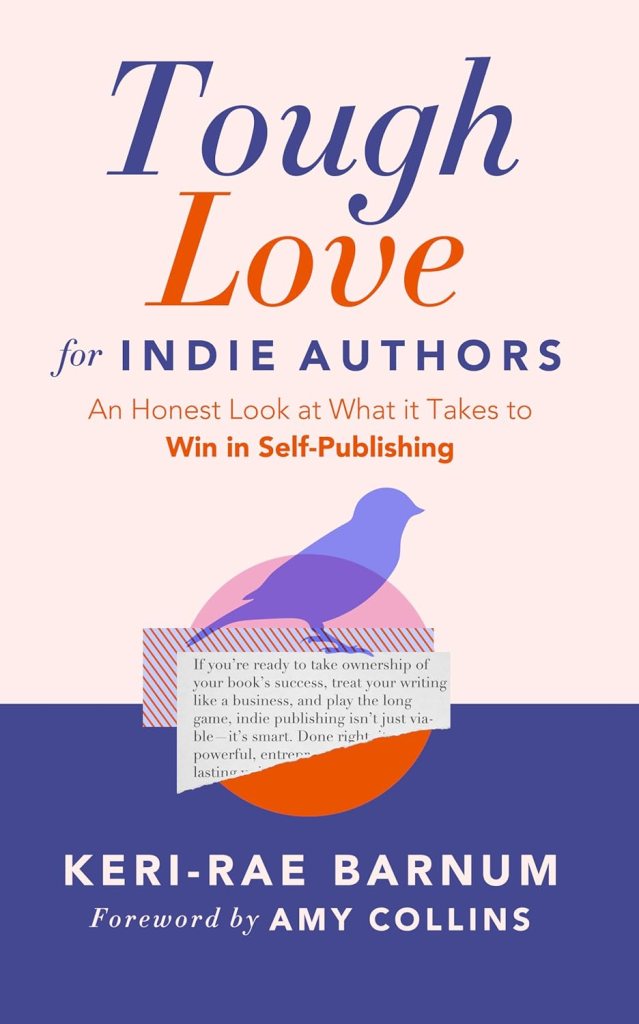
I’m actually a traditionally published author, with an independent/small press. I got an agent who submitted the book to Oliver Heber Books, and I got a publishing contract. Ta-da!
But the self-publishing route has always appealed to me. Before I ran out of money, I was interested in self-pubbing Son of the Siren. I’m glad I didn’t because Oliver Heber Books handled it far better than I could’ve ever done on my own…but I don’t know what the future holds for me, so I always investigate self-publishing.
Also, there’s some overlap–authors, no matter how they are published, are expected to do some hustling and promotion for their books. I picked up Tough Love for those reasons primarily.
But I had sort of a tough love-moment of my own. There’s a section of the book that asks you questions about what sort of writer you want to be versus the type of writer you are now (or something like that; it’s been a while since I’ve read this), and to my astonishment, my result was Hobbyist Writer. Friends, I don’t mean to write as a hobby. I want to do this for a living for the rest of my life.
But apparently, some of how I go about my writing life doesn’t align with the actual writing business and how that works. A lot of it has to do with my output and bad habit of only “writing when I feel like it” (aka, when inspiration hits). I’m not quite professional enough to be professional yet.
This was a harsh wake-up call. I’m learning to be a better writer and a more professional one through my three-book contract with Oliver Heber Books (writing on deadlines where I pump out a book every seven months versus me writing for two or three years per book), but I just don’t have it all figured out yet. I also don’t have a penchant for coming up with ideas for the next book. The Darkening Gate has been in my head for years–nothing new up there rattling around in the brain. And authors who want to be professional keep pumping stuff out.
So, there is some genuine tough love in this self-help book. I also gave it four stars and I also recommend it to writers everywhere, not just self-publishing authors.


Leave a Reply