
Alchemy wasn’t something I was interested in until around 2008 or so when I got into the anime Fullmetal Alchemist, and later Fullmetal Alchemist Brotherhood. The series, based on the beloved manga by Hiromu Arakawa, is filled with lots of historical, alchemical imagery, and takes inspiration from the arcane science-magic with its use of color, interpretation of the alchemical process, and interpretation of the philosopher’s stone.
Fullmetal Alchemist is a brilliant series, but the alchemical stuff really got me curious, and I started looking into things like the Magnum Opus, Hermes Trismegistus and the Emerald Tablet, the 12 Gates of George Ripley, the cauda pavonis (peacock’s tail), and more. It is so strange to me that what started out as a scientific-ish process of reconstitution and refinement also, at the same time, spoke to something esoteric and untouchable–immortality. While alchemists were hunched over their crucibles and alembics, trying to create a Philosopher’s Stone to end death, there were also alchemists out there dealing with spiritual alchemy, focusing on becoming a pure, godlike being through the reconstitution and refinement of the self.
It was the spiritual, esoteric stuff that got me going, and I always knew that when it came to The Name and the Key, alchemy would be the source of my magic system. It was convoluted and cool and summoned endless fascination. The artwork and aesthetics and symbolism also drew me in.
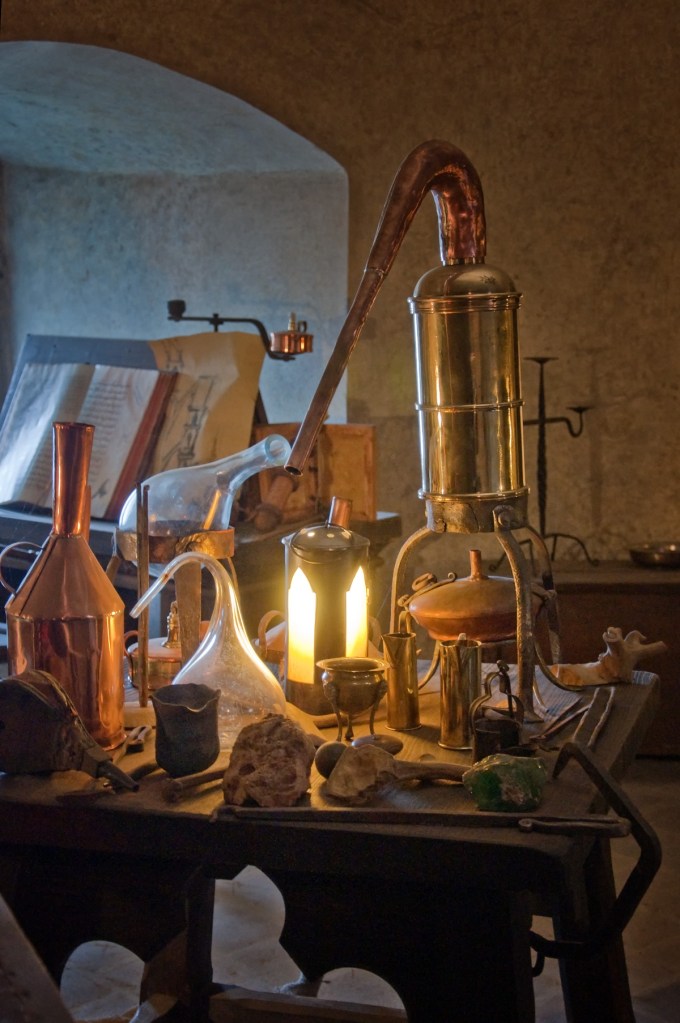
When I drafted The Name and the Key as my graduate thesis for Seton Hill, I did a lot more research on alchemy, but I could only do so much before my head would explode. It’s not easy stuff to tackle, in my opinion. And I wanted the alchemical influences to be subtle. However, looking back at the thesis, I think the magic influence was too under the radar. I think I used the term “sublimation” and used gates, but nothing else really suggested alchemy.
This version–aka, the version of The Name and the Key that’s to be published–I come right out and use alchemical terms openly, and my male lead Andresh calls himself an alchemist. But again, I’m leaning towards the spiritual kind of alchemy, not the “oops we accidentally invented phosphorus” alchemy.
Andresh begins his alchemical journey trying to find a type of magic that can stop death. He is a literature student taking what we would call a medieval lit class, and they are studying old manuscripts to learn about metaphor and imagery. One of the works they study is an excerpt from an alchemical text. Something in the text speaks to Andresh, and he thinks that the excerpt might actually have some truth in it.
Alchemy is full of secrets and hidden things, and Andresh makes a pact with a demon named Isabelle, who promises to help him take up the Magnum Opus–the name for the Great Work, or alchemical journey. It is a refinement process of the self: Andresh must remove the parts of him that make him human, where he will then reform himself into something godlike and pure. Then, with those powers, he will end death for everyone, not just himself.
That information above is a preview of The Step and the Walk, by the way. That book (Book #2 in the trilogy) talks about the time Andresh was at university and the dark magic he lost himself in.
In The Name and the Key, Lily, the main character, only gets glimpses of what alchemy is. Andresh’s demon Isabelle appears to Lily and encourages her to push Andresh into completing the Magnum Opus, and mentions “nigredo.”
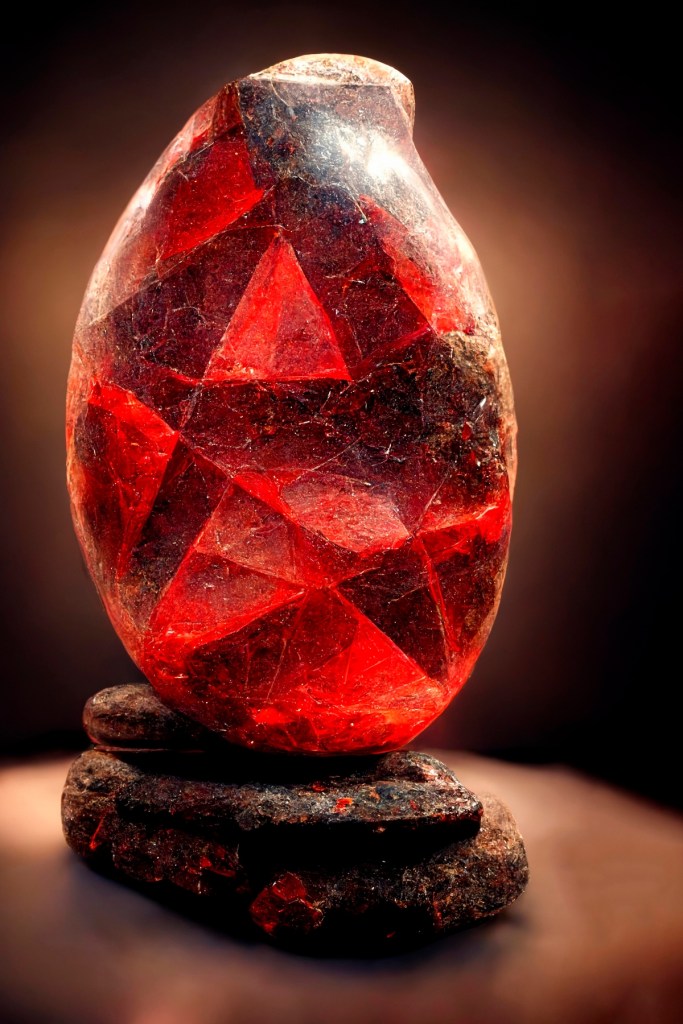
In alchemy, there are four stages to creating a philosopher’s stone: nigredo, albedo, citrinitas, and rubedo. Basically after burning, separating, fermenting, and doing all other sorts of transformative things to a substance, those four stages mark color changes as “gates” to the creation of a philosopher’s stone. Nigredo is black, albedo is white, citrinitas is gold, and rubedo is red–the red of the philosopher’s stone.
Andresh isn’t making a stone–he is remaking himself. At each of the four gates (I literally make them color-coded gates in an underworld), he gives up something of himself that indicates humanity, and crosses the gate, where he’s rebuilt again as something better. He does this four times, and if he makes it through to Rubedo Gate, he’s a god.
The Name and the Key is all about that first gate, Nigredo. The very first sacrifice is human desire. As Andresh is in love with Lily, he has second thoughts about whether or not he can walk away from her. But the Magnum Opus must be completed once started, so Andresh might have to sacrifice what he desires most in this world…or face the darkest of consequences.
I could ramble incoherently about this stuff for a long time, but I can’t call myself an alchemy expert because admittedly a lot of it goes over my head. But I love taking things I understand and reshaping it into something different where my writing is concerned. I’m stopping here to avoid oversharing and spoilery things, but I hope this snapshot of the magic system keeps you intrigued.
The Name and the Key is the first book in a forthcoming trilogy published by Oliver Heber Books. Its tentative release is in 2026.

 Kristina Elyse Butke
Leave a reply to Can I make alchemy comprehensible? – Kristina Elyse Butke Cancel reply