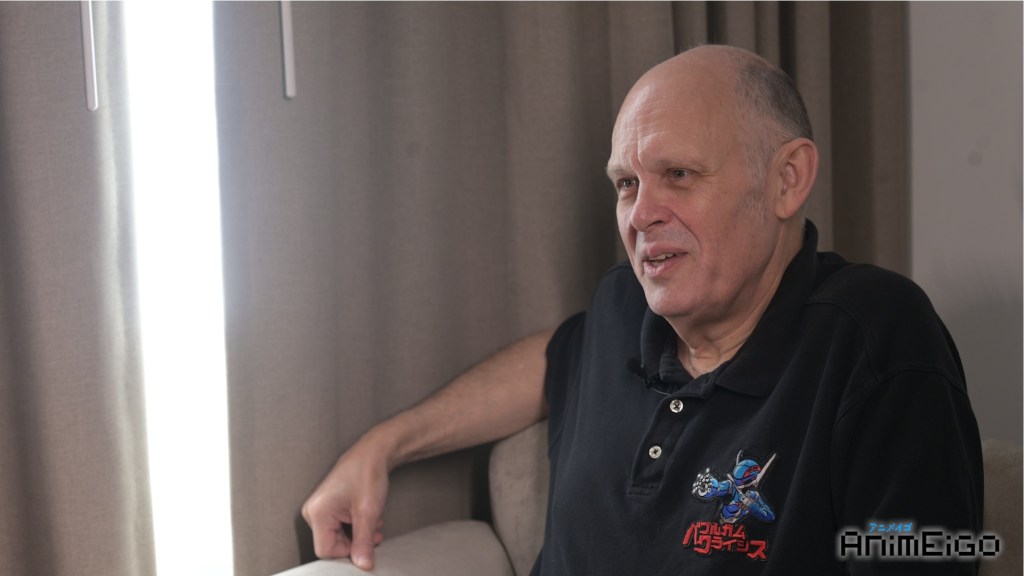
New interview features an insightful chat with AnimEigo founder and visionary entrepreneur Robert Woodhead
Anime distributor AnimEigo and parent company MediaOCD have released the latest episode of The Anime Business on YouTube featuring an interview with AnimEigo founder Robert Woodhead.
Founded in 1988, the company was one of the first brands dedicated to licensing and distributing anime in North America and was a major force in helping to build the domestic popularity of anime.
The Anime Business Episode 14 is available now on the official AnimEigo YouTube channel at:
https://www.youtube.com/@AnimEigo/videos
Robert Woodhead’s lifelong interest in anime grew out of foray into the early stages of home computer video games in the mid-80s and his development of a game called Wizardry. A chance meeting with a superfan of the game named Roe Adams III would have a major impact on the course of Woodhead’s life after he began showing him bootlegged anime titles.
Woodhead possessed a video board that created subtitles and the pair saw a commercial opportunity to license and produce subtitled versions of anime titles, a move that laid the foundation for what would become the North American anime industry. AnimEigo’s first “test” title was an English subtitled version of Vampire Princess Miyu and Woodhead went on to license Metal Skin Panic MADOX-01, which would become AnimEigo’s first commercial release on VHS in 1990.
The Wizardy video game had a strong following in Japan, and Woodhead’s friend, Toshio Okada, who would later found Studio Gainax, offered to introduce him to a variety of anime studios. Okata also supplied Woodhead with a translator named Natsumi Ueki, who would later become Woodhead’s wife and business partner. A series of successful business meetings led to the eventual release of titles such as Riding Bean and Bubblegun Crisis, which would go on to become one of AnimEigo’s bestselling titles and opened the door to licensing scores of additional titles.
The advent of DVD and a burgeoning anime community in the U.S. presented additional opportunities for AnimEgo and Woodhead recalls the nuances and challenges subtitling for this fast-growing format. The catalog continued to expand quickly throughout the 90s and included seminal releases such as Kimagure Orange Road, Urusei Yatsura, Bubblegum Crisis and Bubblegum Crash, and a range of live action samurai titles such as Lone Wolf and Cub as well as a series of successful Kickstarter campaigns for additional releases. Interestingly, a range of “educational” videos for Hello Kitty that were licensed directly from Sanrio Japan (to the chagrin of the brand’s U.S. counterpart) also become bestsellers.
An especially interesting moment is captured at the end of the interview, after the cameras were turned off but the microphone remained on, when Woodhead first mentions passing on the legacy of AnimEigo to Justin Sevakis. He would go on to purchase the company and continue to carry on the legacy as part of his MediaOCD brand.
The Anime Business is a first-of-its-kind series featuring a wide range of entrepreneurs and visionaries that helped to pioneer and shape the North American anime and manga industries. It is produced and hosted by industry veteran and MediaOCD founder and AnimEigo CEO Justin Sevakis. Episodes 1-12 of The Anime Business and bonus clips are also now available to stream on the AnimeEigo YouTube channel.
All episodes of The Anime Business are available in English. Japanese subtitles are also available via a special grant from the Kleckner Foundation. Additional episodes and interviews are currently in production. AnimEigo and MediaOCD invite fans that would like to help support and crowdfund future episodes of The Anime Business to donate at: https://www.mediaocd.com/plans-pricing
About AnimEigo:
AnimEigo is a division of MediaOCD and was founded in 1989 as one the first distributors to focus on anime and an array of acclaimed Japanese live-action films in the United States and Canada. Over the last 35 years, AnimEigo consistently broadened the market for Japanese content by cultivating audiences for new genres of film.
Renowned for high quality translations, subtitles, and dubbing, AnimEigo has released a wide variety of classic anime titles. For more information, please visit: mediaocd.com.
The contents of this post came from a press released provided by Erik Jansen of MediaLab Public Relations.
 Kristina Elyse Butke
Leave a comment