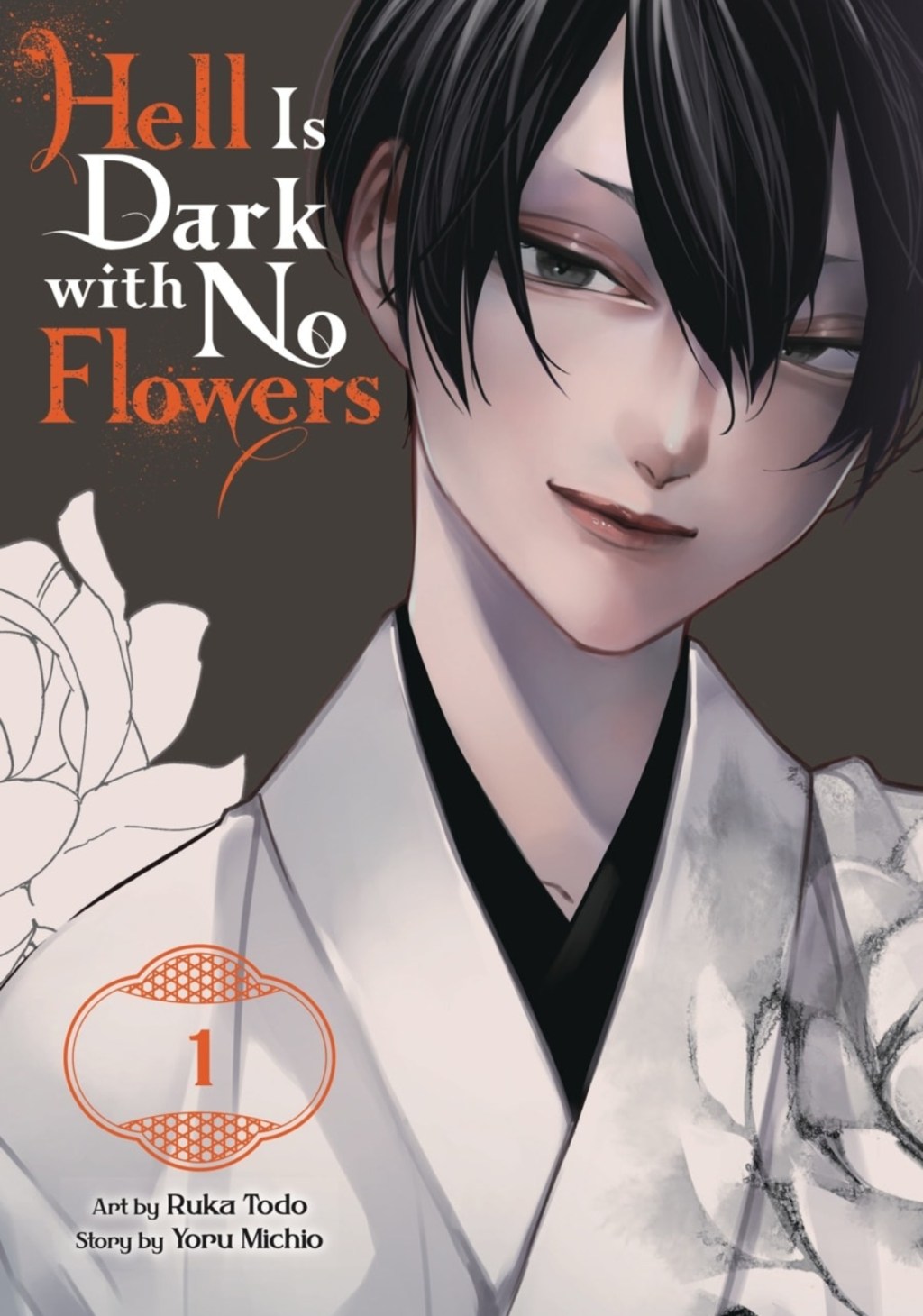
This review was originally published on The Beat.
Imagine going through life with an incredible but horrific ability to see certain people as monsters. Seiji Tohno is burdened by this gift, and he never knows when a monster will appear. It terrifies him every time, but to Shiroshi Saijou, a mysterious young man Seiji meets by chance, sees it as valuable and worthy of use.
Seiji is down on his luck when he meets Shiroshi. He is a college dropout, estranged from his parents, unable to find a job, and homeless. One night, down a dark alleyway, Seiji discovers a huge European mansion in the middle of nowhere. He’s drawn to it, and a servant girl named Beniko appears to welcome him in.
Seiji is led to a huge room with the formidable and beautiful Shiroshi waiting for him, telling him he has been expected.
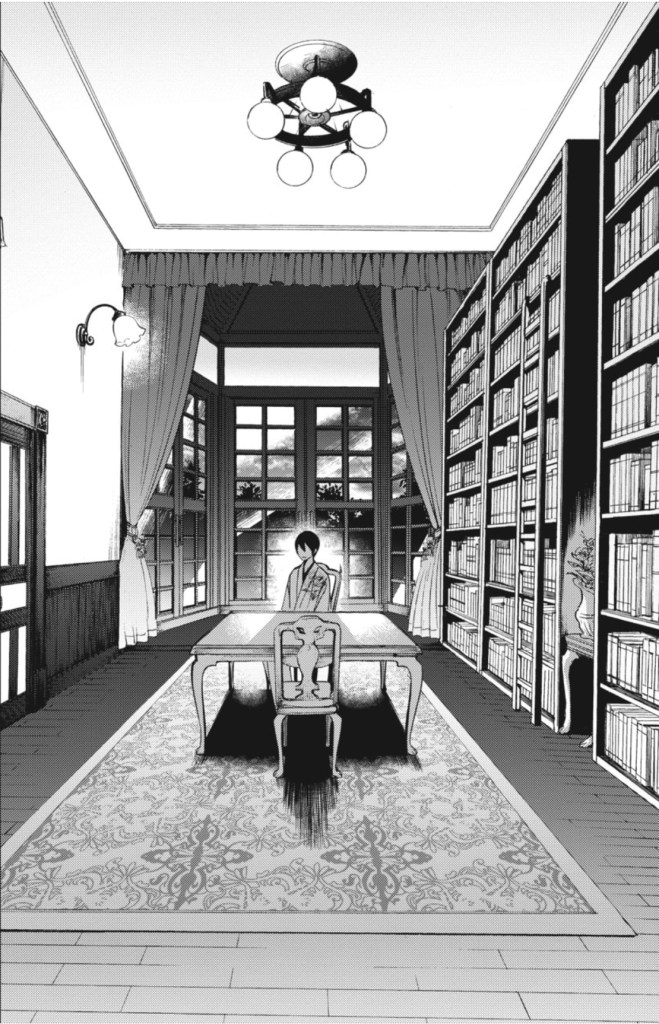
Shiroshi has Seiji explain his “gift” and offers him room and board at the mansion if he can use his ability to identify people as monsters. Seiji is reluctant at first but agrees.
He learns a lot about his ability from Shiroshi. The monsters he sees are actually yokai, and they appear because they are a manifestation of a person’s sins. Shiroshi’s job, as son of the King of the Underworld, is to render final judgement on these sinners and send them to hell. He just needs Seiji’s help to identify them.
The manga has different arcs named after the yokai that appear, and there’s sort of a monster-of-the-week flavor that comes from that choice, but it’s not off-putting in any way. Each yokai is also an individual case needing explored, so the horror of the manga also becomes a mystery to determine what each person’s sins are and why they manifested as a specific yokai.
Sometimes the people Seiji sees look like they could be monsters. Other times, the person has an innocuous appearance that makes you wonder what their sin could possibly be. That’s one of the most fun things about Hell is Dark With No Flowers—trying to figure out the truth. What could these people have done? What is the meaning behind their yokai?
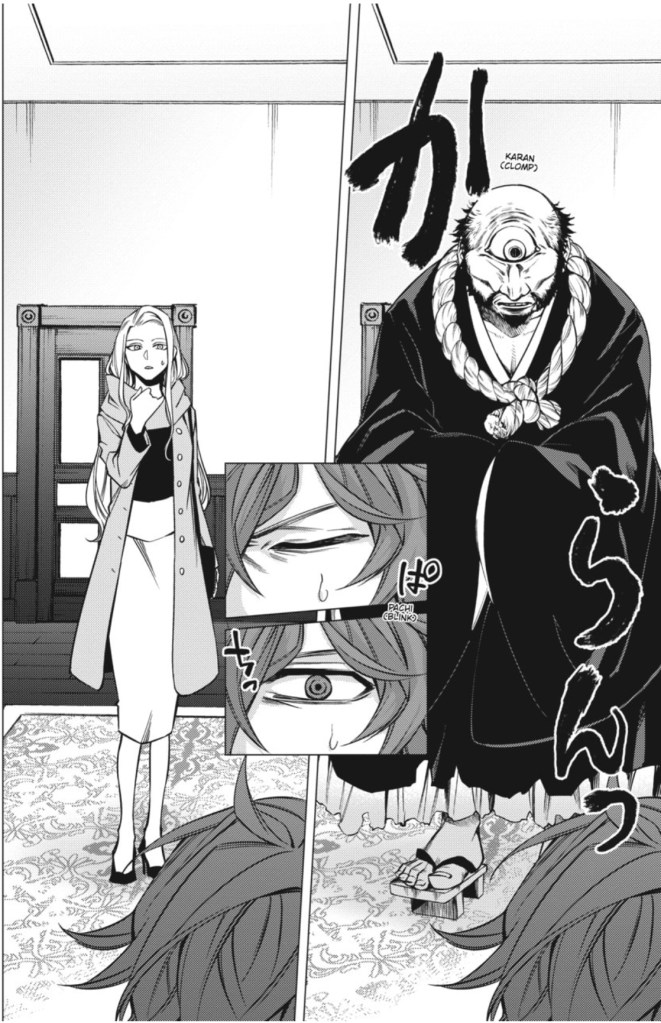
If you are into Japanese folklore, you’ll be learning a lot from this manga. There are references to famous items from stories, such as “The Mirror of Retribution” and “The Mirror of Illumination.” There are references to historical documents such as The Illustrated Demon Horde’s Night Parade. And of course, nods to a variety of yokai ranging from famous (like the kappa) and perhaps the not as well known (the jatai).
In addition to the history and folklore, the illustrations by Ruka Todo bring out the best of the yokai, rendering them as disturbing creatures. Not all of them are scary, but they certainly are unsettling. The art definitely sets the tone for the manga—expect something dark, mysterious, and haunting.
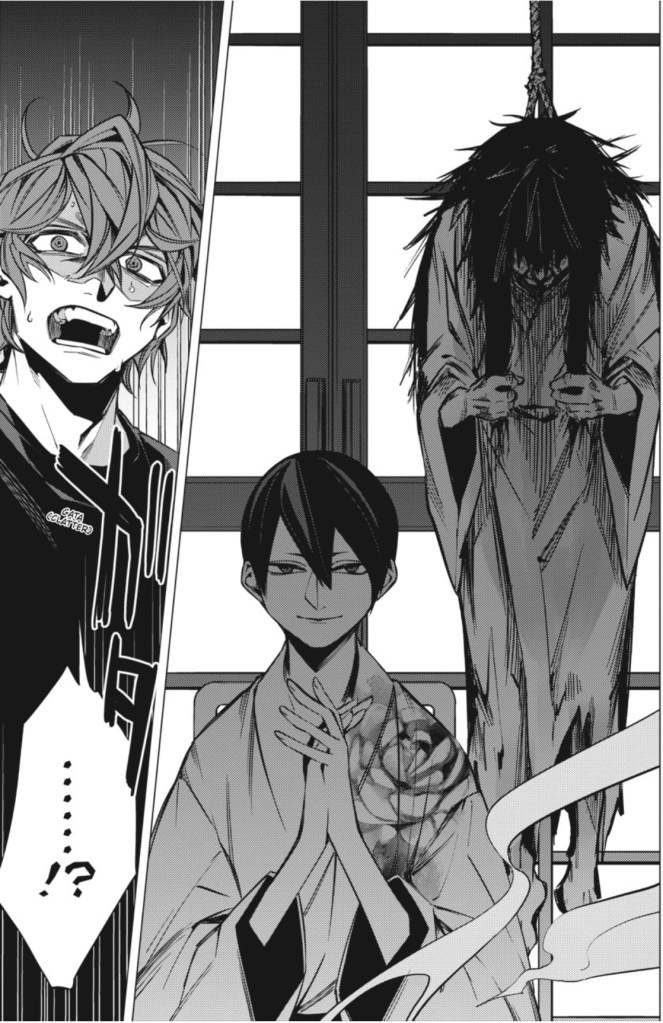
Yoru Michio’s storytelling is top notch. The pacing is well balanced and sometimes even brisk, keeping you on the edge of your seat as you try to guess what will happen. Michio’s characterizations are unique, and each character clearly has their own voice and style. Seiji is emotional and Shiroshi is cool-headed, and they play well off each other.
Each “client” who comes to see Shiroshi is also distinct, with different problems and different sins. It’s exciting to see what yokai they’ll manifest as next.
The manga introduces a new major character toward the end, and it ends on a cliffhanger in the second arc. Readers will have to wait until May 27 to get the next volume of the manga, but it will be worth it.
Hell is Dark with No Flowers Volume 1 is now available directly from Yen Press and other online or physical booksellers. Volume 2 came out June 3, Volume 3 came out September 23, and Volume 4 will be out April 28, 2026.
 Kristina Elyse Butke
Leave a comment