
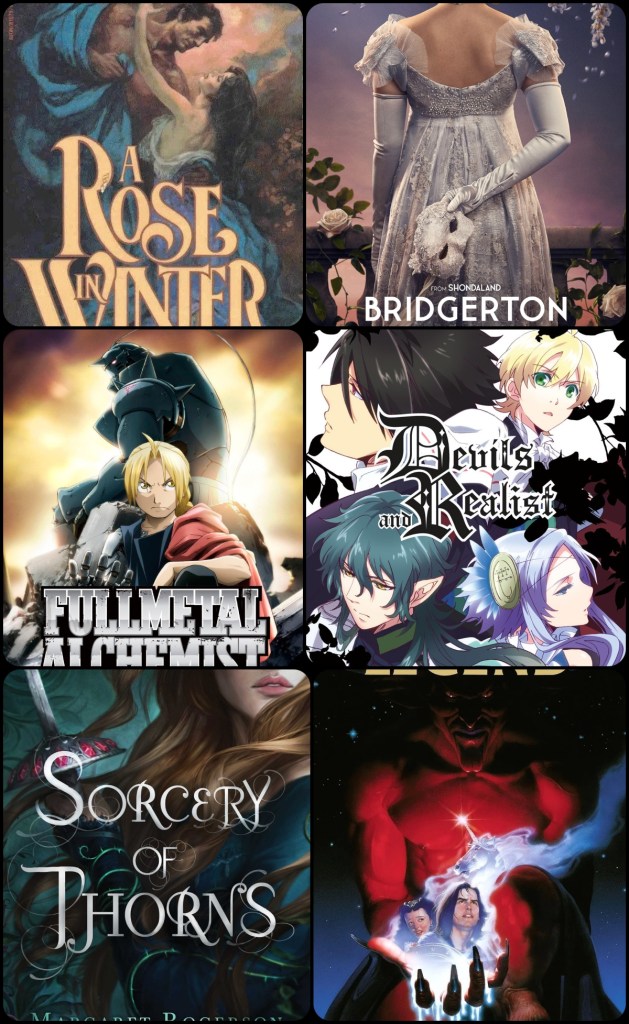
When I wrote The Name and the Key as my graduate thesis from 2010-2013, I only had two influences: Fullmetal Alchemist (2004) and Beauty and the Beast. As I was writing the novel, the Beauty and the Beast references pretty much disappeared from the book altogether, and instead of being a fairy tale-inspired work, The Name and the Key became its own animal.
I have mentioned on this blog that The Name and the Key has since been rewritten (due to my publisher in December!) and is being developed into a full-blown YA romantasy trilogy. I’m writing book two, The Step and the Walk, right now. As the book has developed and grown, so have my influences. I’d love to share them with you!
Anime

Fullmetal Alchemist Brotherhood is a series that ran from 2009-2010 and is the complete adaptation of Hiromu Arakawa’s manga masterpiece. It’s considered to be one of the top anime series of all time and consistently ranks high with critics and fans alike.
The original Fullmetal Alchemist was what I saw when I was writing The Name and the Key in grad school, and the concept of alchemy and the magic behind it really intrigued me, so I decided to add alchemy to my thesis. While the original FMA series was emotional and had many strengths, I absolutely hated the ending and the movie that “wrapped up” the series because I felt like it undermined the emotional relationship between the Elric brothers, and just overall felt unsatisfying.
Fullmetal Alchemist Brotherhood fixes the first series’ issues and has a complete ending that provides closure and full resolution. And it’s a great ending, too. It’s one of the most satisfying series I’ve ever watched, and it is extremely faithful to the source material.
Fullmetal Alchemist Brotherhood gets into the alchemy a little bit more, including the more esoteric stuff, which is the type of magic I focus on in The Name and the Key Trilogy. And the show is epic in scope, intimate with characters, and expertly plotted. I find it inspirational on a creative and craft level.
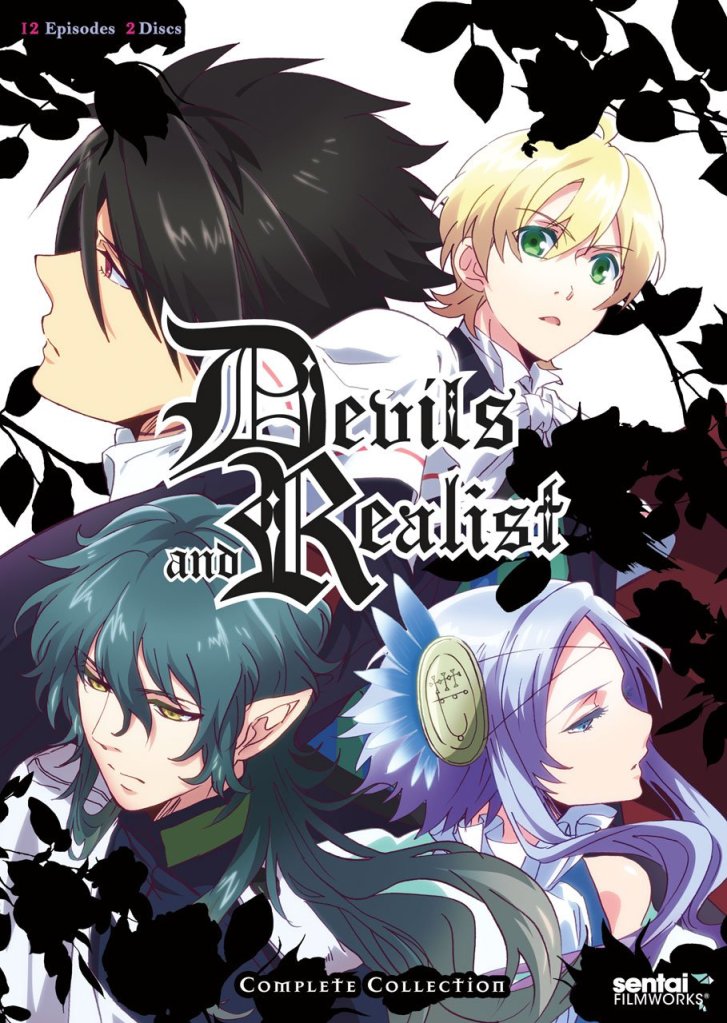
Another anime that has inspired The Name and the Key Trilogy is a quirky, aesthetically pretty series called Devils and Realist. It takes place in a boarding school where William Twining, a pragmatic and practical student, finds out that he is a descendent of King Solomon and has been tasked with choosing the next ruler of Hell from a long line of competitive demons who just won’t leave him alone. Since William doesn’t actually believe in devils, this becomes quite a predicament for the demons.
I look to Devils and Realist for aesthetic purposes mostly, but also…the demons in the series are named after the very same demons who appear in the Ars Goetia, aka the first section of The Lesser Key of Solomon — a real-life historical grimoire that has also inspired my trilogy.
The demons in Devils and Realist are gorgeous and have unique attributes to them. When I was in Japan I bought an art book for Devils and Realist because I wanted to have a copy of all the demons depicted in the show. Based off of the manga by Madoka Takadono, which also features gorgeous artwork, the series plays around with old, old magic from the Western European tradition (with the exception of King Solomon, who is Middle Eastern). I wanted my demons to be dangerous and beautiful, so I borrowed some of Devil and Realist‘s aesthetic for them.
Film
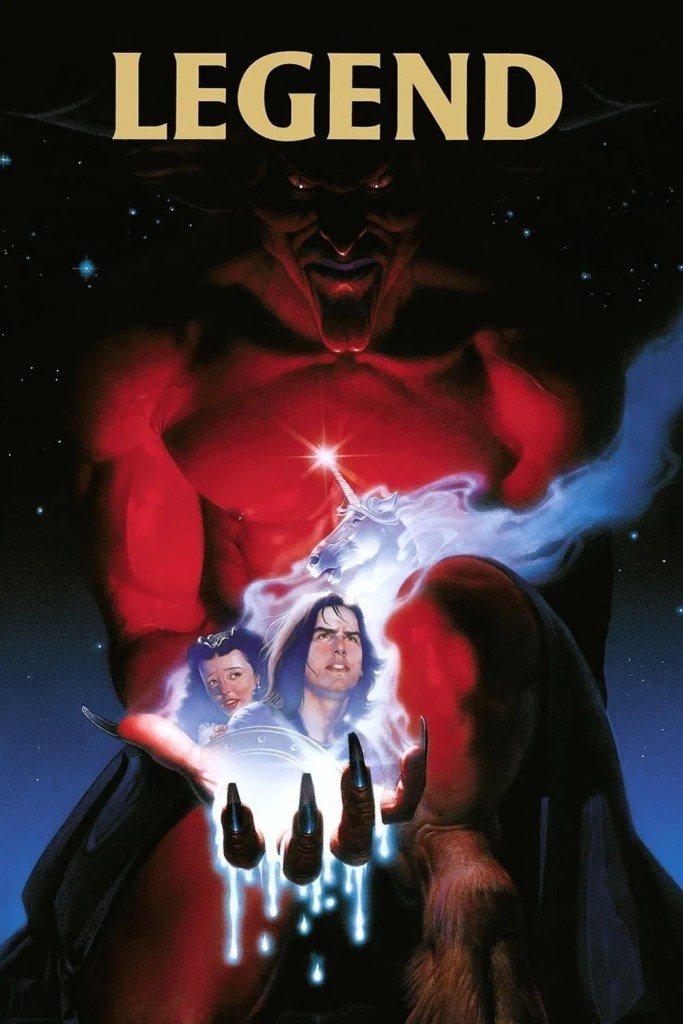
Even though Legend is one of the crowning jewels of 80s fantasy film (despite mixed reviews), I didn’t actually watch it until I was a college undergraduate. I haven’t seen the original theatrical cut; only the director’s cut that restored the original orchestral score to the film.
While I didn’t care for Legend in terms of its storytelling or screenwriting, I believe it’s one of the most vividly gorgeous films out there. It nails fantasy archetypes and some of the “good versus evil” concepts…and has incredible sets, costumes, and design.
What specifically has influenced me for The Name and the Key Trilogy are the scenes in Legend that take place in a sort of underworld–where Darkness lives. There the innocent Princess Lili is seduced by a mysterious dark figure that compels her into dancing, and Lili becomes corrupted into a suitable bride for Darkness.
The set design for the underworld is sort of what I envision for the demon realms in The Name and the Key Trilogy. Lots of statues and carvings; dark, glittery designs; tall, thick columns that stretch up into ceilings so tall you can’t even see them…the art of Legend is haunting and mesmerizing, and I want the same for my books.
Television
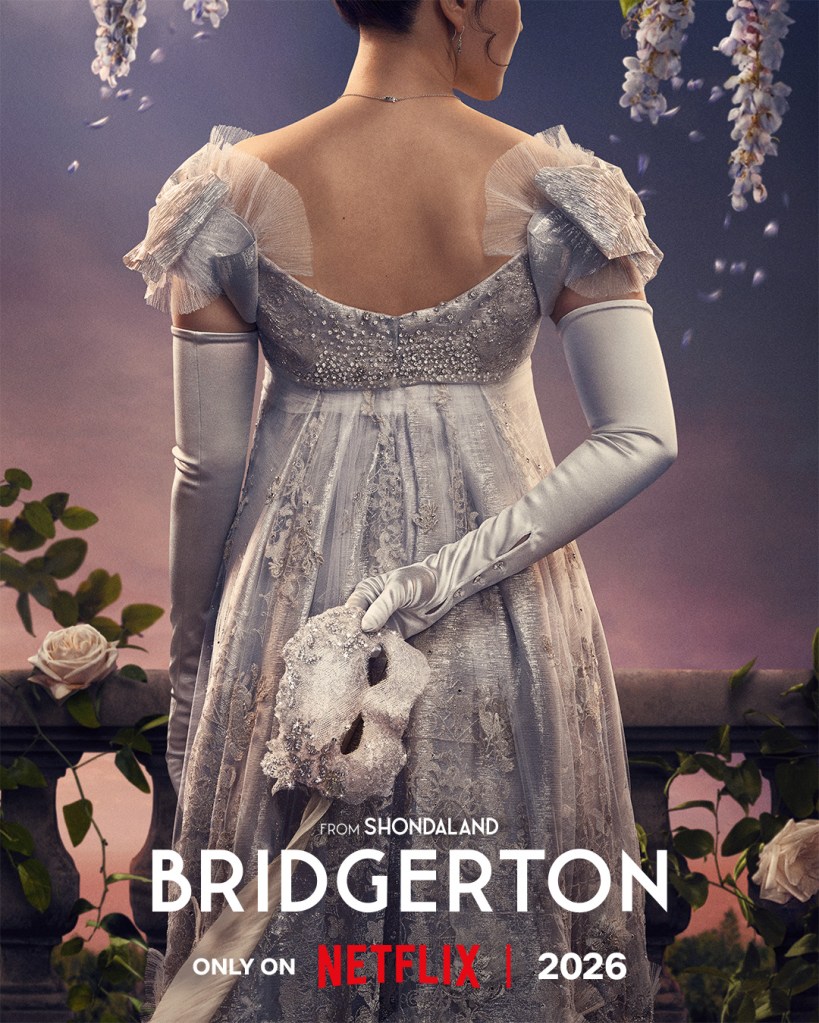
Bridgerton probably seems like the odd one out here–I’ve got all this fantasy and darkness and whimsy, and wham! Regency romance. Kinda horny regency romance. Well…my trilogy is a romantasy, and its aesthetic, setting, and time period are inspired by the Regency. However, it’s closer for me to say it’s inspired by Bridgerton‘s interpretation of the Regency. It’s not historically accurate at all…especially the costumes. Everything about this show is a “Regency vibe,” or maybe a fantasist’s interpretation of the time period.
Costume designer Ellen Mirojnick has been working in the industry since the 1970s […] She says she tackled this project the way she always does with historical work: first by looking at the period she’s working in, then amplifying it. The result is a funkier, louder, wilder version of the 1800s.
While Mirojnick’s designs employ historically accurate elements such as empire silhouettes and silk gloves, the details take the costumes above and beyond those of the Regency era. Her fictionalized vision of 1813 includes neon color schemes, larger-than-life wigs, thousands of Swarovski crystals, and hair accessories galore. The show is filled with lavish events like balls, parties, and even boxing matches, so Mirojnick had her hands full creating unique looks for the entire cast. (Burns, 2020, par. 2-3).
I find Mirojnick’s costumes mostly beautiful with the exception of Lady Featherington, who looks like a garish housewife from the 60s (however this is fitting with her character). I love how glittery the clothes are, the bright and bold colors…since The Name and the Key Trilogy is a fantasy, after all, I might as well do “fantasy Regency” too.
Interestingly enough, the love stories and romance of the Bridgerton series hasn’t quite gotten my heart to flutter. I think Season Two might have been the closest as it took a cue from Jane Austen, but for romance I look to books for inspiration.
Books
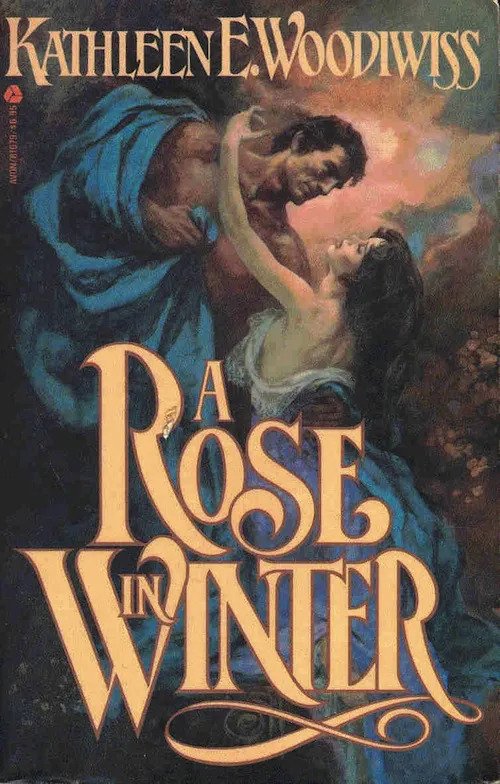
The first romance novel I ever read was when I was like eleven or twelve. For a big chunk of my mom’s life, she was an avid romance reader (she has since moved on to thriller/mystery), and she had a huge collection of books.
The beautiful cover to A Rose in Winter always caught my eye, and finally, I mustered the courage to read the book myself. I did it in secret–I never took the book to my room. I would take it off the shelf, read it in the basement for a bit, then reshelve it. I did this for a week because I felt ashamed as I was reading a book with sex scenes in it and I was just a kid. But I loved it.
A Rose in Winter is a sort of Beauty and the Beast retelling set in the 18th century featuring the heroine Erienne, who gets auctioned off to the highest male bidder for marriage in order for Erienne’s dickish father to pay off debts. Christopher Seton, a dashing and sexy thorn in Erienne’s side, doesn’t win the bid…instead Erienne is sold to Lord Saxton, a mysterious disfigured man who wears a mask.
This book was my introduction to the romance genre and is a foundational work for me. The romance, the steamy scenes…I ate it all up.
I reread A Rose in Winter when I lived in Japan, curious to see if the novel still holds up from the perspective of an adult reading a book. I still think it’s great, but there is some dubious consent/rapey vibes here and there, and…the ending is happy, but kind of…disappointing. I’d tell you why but it’s a major spoiler. Just know that it involves who Erienne ends up with.
Despite my few complaints, I consult this book whenever I want to write romance. When the book works, it works amazingly. I want to be able to pull romance off well, too.
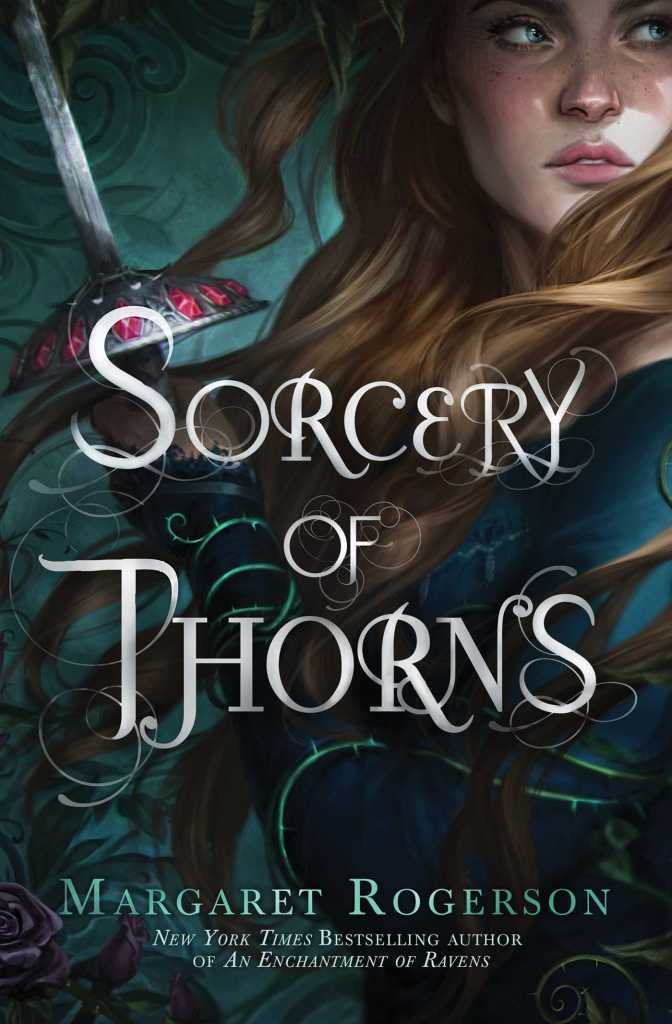
Another inspirational book for The Name and the Key Trilogy is Margaret Rogerson’s Sorcery of Thorns. It’s a YA fantasy where books can turn into living monsters, where sorcerers make pacts with demons, and libraries are genuinely magical places. Nathaniel Thorne is a dashing male lead, and his demon servant Silas is also a fascinating character.
Rogerson has this really cool idea when it comes to magicians making pacts. For example, Silas has white hair and is overall pale, and he can also turn into a solid white cat. When he is in a pact with Nathaniel, Nathaniel takes on a trait from Silas–the magician’s hair bears a white streak in it, emblematic of Silas’s appearance. The same is with the demon Lorelei and Ashcroft, her magician. Lorelei’s eyes are red. To show that she is in a pact with Ashcroft, one of his eyes is also red.
This is so unique that obviously I can’t do anything like this with my own book, but overall I find Rogerson’s depictions of magicians and their demons to be really intriguing and creative. My goal is to pull that off, too.
Reference
Burns, E. (2020, December 29). How accurate are these costumes, exactly?. The Cut. https://www.thecut.com/2020/12/bridgerton-costume-designer-ellen-mirojnick.html#:~:text=The%20show%20is%20lots%20of,the%20beauty%20of%20the%20bosom.
 Kristina Elyse Butke
Leave a comment